



| Neu Biotic – per daily capsule | Detail |
|---|---|
| Live bacteria strains | 20 strains across 5 genera |
| Total CFU | 30 billion CFU (at manufacture) |
| Prebiotics | Inulin (100mg) + FOS (50mg) |
| Adults | 1 capsule daily |
| Children aged 12+ | 1 capsule daily |
| Capsule type | Enteric-coated (acid-resistant) |
| Storage | Below +21°C; refrigerate after opening |
The human body is a thriving ecosystem — around 30 trillion human cells alongside roughly 39 trillion microbial cells: bacteria, fungi, viruses and protozoa that together form the human microbiome. This microbiome is as unique as a fingerprint, and its balance has been linked to digestion, immune function, mood, skin health and other aspects of wellbeing.
Interest in probiotics as a live bacteria supplement for gut health has grown alongside research into specific strains of live cultures. The evidence suggests some strains may support digestive comfort, bowel regularity, immune function and aspects of mental wellbeing when used in studied doses. What is now well established is that the effects of live cultures are strain-specific and dose-dependent, and that they may be enhanced when combined with prebiotics that help feed the bacteria being introduced.
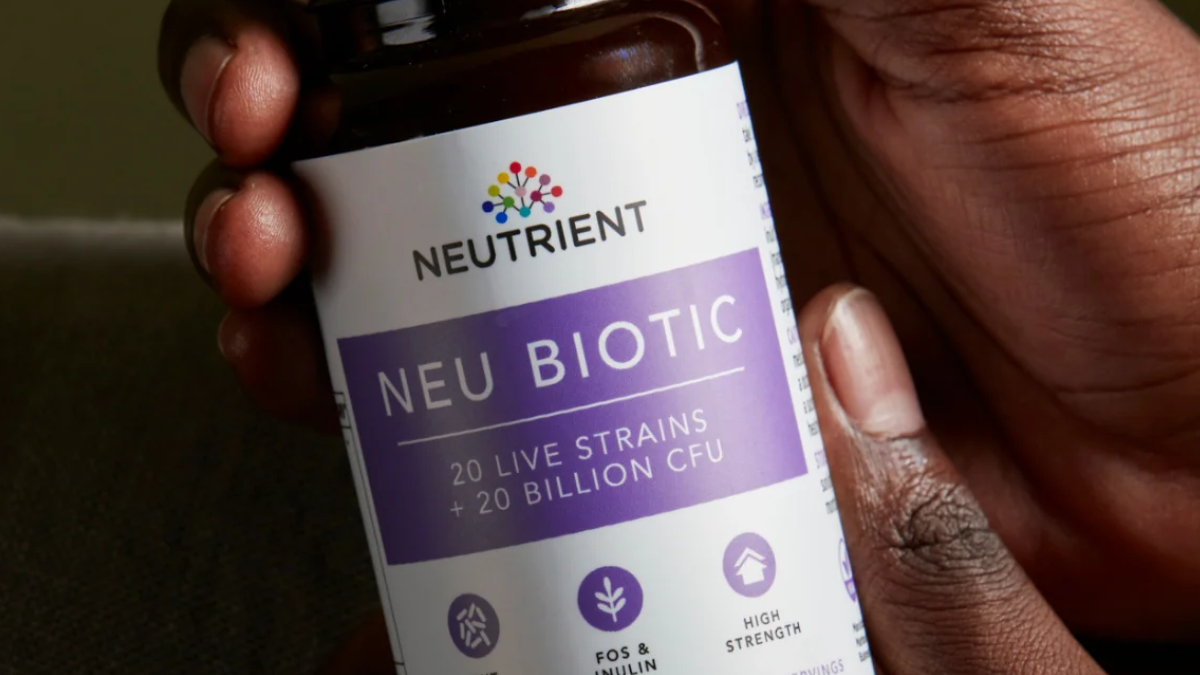
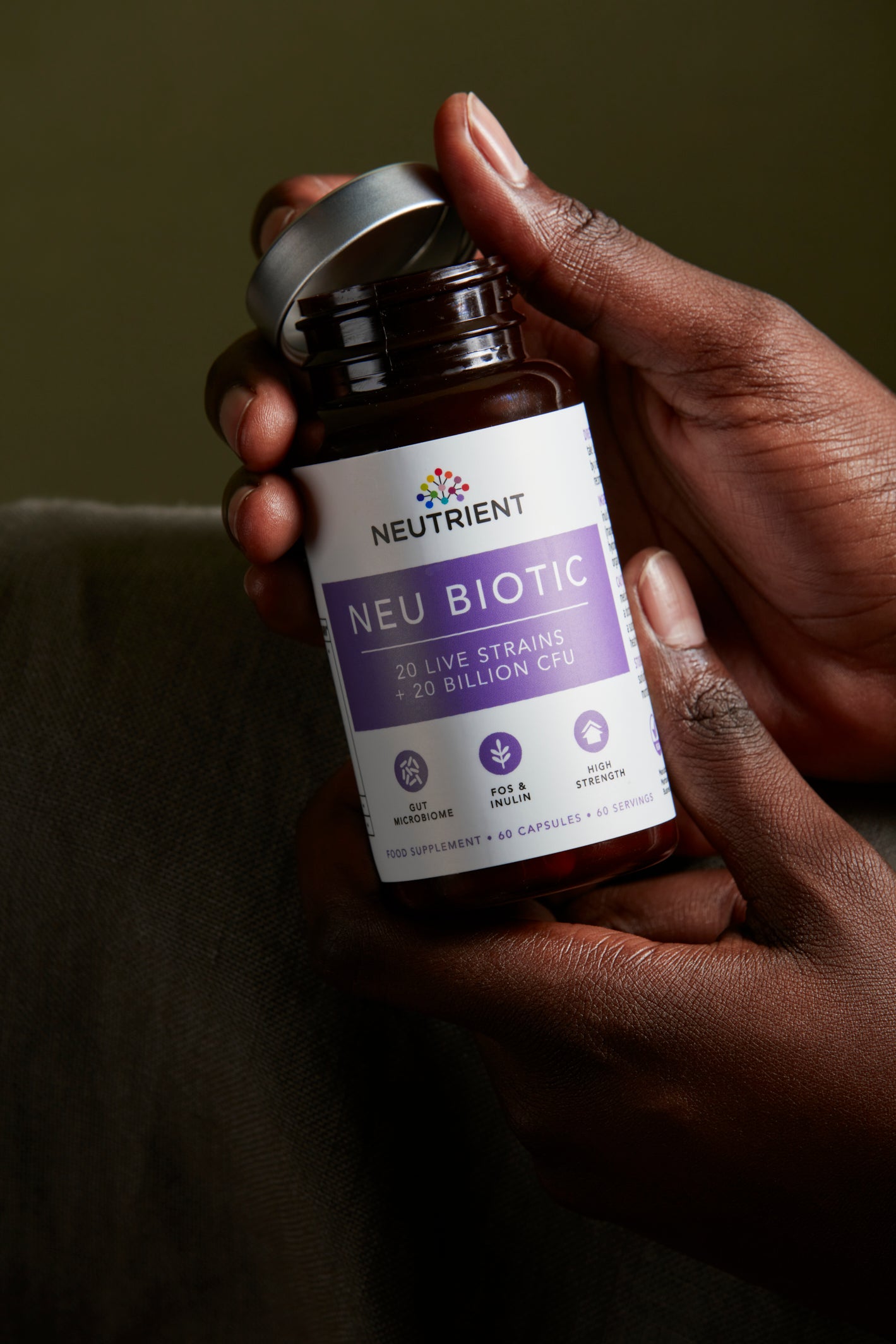
Neutrient Neu Biotic is a high-strength, multi-strain bacteria supplement delivering 30 billion CFU from 20 live bacteria strains per daily capsule, combined with the prebiotics inulin and FOS. Its enteric-coated capsule is designed to help protect the live cultures during stomach transit and support release in the intestine, where these bacteria naturally reside.

What are live cultures and prebiotics?
Live cultures, referred to in scientific literature as probiotics, are living microorganisms that may provide health benefits when consumed in adequate amounts. They occur naturally in fermented foods and in concentrated supplements. Many form part of the gut microbiome, the complex community of bacteria, yeasts and other microbes in the digestive tract, where an estimated 500 to 1,000 bacterial species reside. When beneficial populations are reduced — by antibiotics, poor diet, illness or chronic stress — opportunistic bacteria or yeasts may take hold, a disruption known as dysbiosis.
Prebiotics are non-digestible fibres that act as a food source for beneficial bacteria, helping support their growth and activity. When fermented by gut microbes they produce short-chain fatty acids such as butyrate, propionate and acetate. Among the best known are inulin and FOS, both of which Neu Biotic contains — combining live cultures with the fibres that nourish them creates a synbiotic, a fundamentally more intelligent approach than a probiotic alone.
How much do you need? Dosage and CFU
The strength of a live cultures supplement is measured in colony-forming units (CFU). There is no single agreed minimum dose for general health, but clinical research typically uses several billion CFU per day, and a 2017 review found 10 billion CFU per day was associated with benefits for antibiotic-associated diarrhoea. Neu Biotic's 30 billion CFU was selected to align with dosing levels used in clinical research.
Risk factors for microbiome imbalance
The gut microflora is generally stable, regulated by competition for space and nutrients, but several common factors can destabilise it. Antibiotics target pathogens but also affect beneficial bacteria, and a single course can alter the microbiome for months. Chronic stress alters gut pH, reduces motility and lowers secretions favourable to Lactobacilli. A modern diet high in processed foods depletes prebiotic fibre and beneficial microbes. Medications such as proton pump inhibitors and corticosteroids alter gut pH and composition. Acute GI infections and chronic illness disrupt balance, and travel exposes the gut to unfamiliar bacteria, water and diet.

Food sources: live bacteria and prebiotics
Diet is the foundation of a healthy microbiome. Some foods provide live bacteria; others provide the fibres that feed them. Variety is key — different prebiotic fibres feed different bacterial species, so a diverse plant-based diet supports a more diverse microbiome. Note that cooking can reduce the prebiotic content of some foods.
| Live-bacteria food source | Notes |
|---|---|
| Yoghurt (live cultures) | One of the most widely available; choose 'live' or 'active cultures' |
| Kefir (fermented milk) | Often a broader range of strains than yoghurt; water kefir is dairy-free |
| Kimchi | Fermented Korean cabbage; may contain Lactobacillus species |
| Sauerkraut | Fermented cabbage; must be unpasteurised to contain live bacteria |
| Miso | Fermented soybean paste; also a source of enzymes and B vitamins |
| Tempeh | Fermented whole soybean; also a complete protein source |
| Natto | Fermented soybeans; rich in vitamin K2 and beneficial bacteria |
| Kombucha | Fermented tea; contains a variety of yeasts and bacteria |
| Fermented pickles (brine) | Must be salt-brined, not vinegar-pickled, for live cultures |
| Raw apple cider vinegar | Unfiltered and unpasteurised; contains the 'mother' culture |
| Certain hard cheeses | Gouda, cheddar, mozzarella and cottage cheese may contain live cultures |
| Prebiotic food source | Primary prebiotic compound |
|---|---|
| Jerusalem artichoke | Inulin (one of the richest dietary sources) |
| Chicory root | Inulin and FOS |
| Garlic | FOS and inulin |
| Onions and leeks | FOS and inulin |
| Asparagus | Inulin |
| Bananas (slightly unripe) | Resistant starch and FOS |
| Apples | Pectin (prebiotic fibre) |
| Oats | Beta-glucan |
| Barley | Beta-glucan and FOS |
| Legumes and beans | GOS and resistant starch |
| Sweet potato | Resistant starch |
| Mushrooms | Beta-glucan |
| Cabbage and squash | Pectin and inulin |
What are live cultures and prebiotics good for?
A high-quality multi-strain bacterial supplement is designed to work in harmony with the body's existing microbiome. Far more than a digestive-system resident, the gut microbiota is involved in immune function, metabolic regulation, gut-brain communication and protection against harmful microorganisms. Because effects are strain-specific and dose-dependent, the sections below describe the areas where live cultures and prebiotics have been most studied.


Why a synbiotic? Live cultures with prebiotics
A synbiotic is a supplement that combines probiotics with the prebiotics that feed them. By including both inulin (100mg) and FOS (50mg) alongside 20 live bacteria strains, Neu Biotic provides the strains with the fuel they need to establish in the gut, proliferate and produce health-promoting short-chain fatty acids. This is a fundamentally more intelligent approach than a probiotic alone.
Inulin and FOS are two of the most widely studied prebiotics. Research suggests these fibres help support the growth and activity of beneficial bacteria, including Bifidobacteria and Lactobacilli, and their fermentation contributes to the production of short-chain fatty acids that play an important role in the gut environment. Pairing the strains with the fibres that nourish them is the logic behind the whole formula.
"Neu Biotic is one of the supplements I recommend most consistently across my client base — to clients coming off antibiotics, those with bloating or irregular digestion, and anyone under prolonged stress. A multi-strain formula with prebiotics can be a useful way of supporting the gut ecosystem, because it combines a range of bacterial strains with the fibres that help support them. In my practice this fits well alongside dietary and lifestyle strategies aimed at supporting the body's existing microbiome."

Six quick microbiome facts


What makes Neutrient Neu Biotic different?
Neu Biotic is built on the principle that a live bacteria supplement should be comprehensive, clinically relevant and protected. Every formulation decision reflects a specific scientific rationale. It contains 13 Lactobacillus and 5 Bifidobacterium strains — the two most clinically studied genera — plus Streptococcus thermophilus and Enterococcus faecium, listed in full below.
| Strain | Genus | Commonly researched areas |
|---|---|---|
| L. acidophilus | Lactobacillus | Bowel regularity, IBS, immune function, vaginal health |
| L. bulgaricus | Lactobacillus | Lactose digestion, bowel health, immune support |
| L. casei | Lactobacillus | Antibiotic-associated diarrhoea, IBS, immune function |
| L. crispatus | Lactobacillus | Vaginal flora, protection against BV and yeast infection |
| L. gasseri | Lactobacillus | Vaginal health, metabolic health, IBS |
| L. paracasei | Lactobacillus | Immune function, skin health, allergies |
| L. plantarum | Lactobacillus | IBS, bloating, flatulence, gut barrier integrity |
| L. reuteri | Lactobacillus | H. pylori, infantile colic, gut health, immune modulation |
| L. rhamnosus | Lactobacillus | Diarrhoea prevention, allergy, vaginal health, IBS |
| L. jensenii | Lactobacillus | Vaginal flora composition and protection |
| L. fermentum | Lactobacillus | Oxidative stress, immune function, skin health |
| L. lactis | Lactobacillus | Gut barrier, immune modulation, bowel health |
| L. salivarius | Lactobacillus | Oral health, gut barrier, skin inflammation |
| B. bifidum | Bifidobacterium | Immune function, allergy, gut barrier, infants |
| B. breve | Bifidobacterium | Allergies, bowel regularity, infant gut health |
| B. infantis | Bifidobacterium | IBS, inflammatory bowel conditions, infant microbiome |
| B. lactis | Bifidobacterium | Immune function, constipation, respiratory health |
| B. longum | Bifidobacterium | Anxiety, IBS, constipation, immune support |
| Streptococcus thermophilus | Streptococcus | Lactose digestion, gut barrier, bowel health |
| Enterococcus faecium | Enterococcus | Bowel regularity, antibiotic-associated diarrhoea |
20 strains: the multi-strain advantage
A multi-strain probiotic contains a broader variety of bacterial strains than a single-strain product. The human gut naturally contains hundreds of species, and research has linked greater microbial diversity with gut resilience. Some studies suggest multi-strain probiotics may offer benefits over single-strain products, potentially because of interactions between strains or the total dose. Neu Biotic's 20 strains across five genera reflect ongoing scientific interest in both diversity and dose.
30 billion CFU: high strength for meaningful impact
Each daily capsule provides 30 billion CFU, a level commonly regarded as a high-dose live culture supplement. Clinical studies have frequently used doses in the billions of CFU per day, though the most appropriate dose depends on the strains and intended benefit. The 30 billion CFU dose was selected to align with levels used in clinical research, including studies on digestive health and antibiotic-associated diarrhoea.
Lactobacillus and Bifidobacterium: all 20 strains
Neu Biotic contains 13 Lactobacillus and 5 Bifidobacterium strains — the two most clinically studied and broadly beneficial genera of gut bacteria — plus Streptococcus thermophilus and Enterococcus faecium. Together they span bowel regularity, IBS, immune function, vaginal health, skin health, allergy and more, as set out in the strain table above.
Enteric-coated live cultures technology
Stomach acid (pH 1.5–2) can inactivate probiotic bacteria before they reach the intestine, so the delivery system can be just as important as the strains and dose. Neu Biotic's enteric-coated capsule is designed to resist dissolution in the stomach and release its contents in the less acidic small intestine, helping deliver more of the original live culture dose to where the bacteria reside.
Live cultures with prebiotics: inulin and FOS
Neu Biotic combines live cultures with prebiotic fibres in a synbiotic formula. It includes inulin and FOS, two of the most widely studied prebiotics, which research suggests can help support the growth and activity of beneficial bacteria including Bifidobacteria and Lactobacilli. Their fermentation also contributes to the production of short-chain fatty acids that play an important role in the gut environment.
| Test parameter | Specification | COA result |
|---|---|---|
| Total plate count | < 10,000 CFU/g | Complies |
| Total mould & yeast | < 100 CFU/g | Complies |
| Escherichia coli | Absent per gram | Complies |
| Salmonella spp. | Absent per 10g | Complies |
| Staphylococcus aureus | Absent per gram | Complies |
| Pseudomonas aeruginosa | Absent per gram | Complies |
| Listeria monocytogenes | Negative per 25g | Complies |
| Heavy metals (total) | NMT 5 ppm | Complies |
| Lead | < 3 ppm | Complies |
| Mercury | < 0.1 ppm | Complies |
| Moisture (probiotic blend) | NMT 5.00% | 3.36% |
| Inulin/fructans content | Min. 90.0% | 90.83% |

Who is Neutrient Neu Biotic for?
Neu Biotic is designed for adults and children aged 12 and over who want to include a live cultures supplement in their daily routine, or in response to factors that can affect gut flora. It may be particularly suitable for:
• People looking to support their gut microbiome after antibiotic use, one of the most widely studied applications of probiotics
• Those seeking additional support for digestive comfort and regularity
• People experiencing periods of stress or lifestyle change, since diet, travel, sleep and stress all influence the microbiome
• Those interested in the gut-brain connection and its evolving links to mental and emotional wellbeing
• People interested in the gut-skin axis and the relationship between gut and skin health
• Travellers, for whom changes in diet, routine and environment can shift the microbiome
• Older adults, in whom the composition and diversity of the microbiome can change with age
• Those seeking a clean, vegan-friendly supplement with no added colours, flavours, sweeteners or stimulants

How to take Neutrient Neu Biotic
The recommended serving is 1 capsule daily, for both adults and children aged 12 and over, providing 30 billion CFU and 150mg of prebiotic fibre. The enteric-coated capsule is designed to be taken whole. Store below +21°C and refrigerate after opening to help preserve the live cultures.
 Any time of day

Neu Biotic can be taken whenever suits your routine. The enteric coating protects the cultures through the stomach regardless of timing
 Store cool

Keep below +21°C and refrigerate after opening. Cool storage helps preserve the viability of the live cultures over the life of the bottle
 Travel, stress, or antibiotics

Many people choose to take a live cultures supplement after a course of antibiotics, during stressful periods, or when travelling, when the microbiome is most likely to be disrupted
 Alongside a varied diet

A supplement works best as part of a diverse, fibre-rich diet that feeds a wide range of beneficial bacteria. It complements, rather than replaces, fermented and prebiotic foods

How safe are live cultures?
Probiotics have an excellent safety record, with hundreds of randomised controlled trials demonstrating their safety across a wide range of conditions and populations. In otherwise healthy individuals, serious adverse effects directly attributable to probiotic supplementation have been rare.
The WHO and FAO have noted that probiotics may theoretically be associated with side effects in vulnerable populations, but in practice infections linked to probiotic use are rare and reported cases have generally involved patients with serious underlying illness.
Probiotics should be used with caution in immunocompromised individuals, those with serious underlying illness, or those with central venous catheters. For healthy adults and children aged 12 and above, Neu Biotic is considered safe for daily, long-term use.
Every batch is manufactured to EU GMP standards and independently tested for microbiological safety, heavy metals, moisture and potency before release, with the enteric-coated capsule verified for acid resistance.
Disclaimer
Not recommended for children under 12 without medical advice. If you are pregnant, breastfeeding, immunocompromised, have a serious underlying health condition or are taking medication, consult a healthcare professional before use. Food supplements are not a substitute for a varied and balanced diet and a healthy lifestyle.
References
1. Abrahamsson TR, et al. Low diversity of the gut microbiota in infants with atopic eczema. J Allergy Clin Immunol. 2012;129(2):434-440.
2. Ahmad K, et al. Probiotics for the treatment of pediatric Helicobacter pylori infection. Iran J Pediatr. 2013;23(1):79-84.
3. Ahrne S, et al. Alteration of intestinal microflora is associated with reduction in abdominal bloating and pain in IBS. Am J Gastroenterol. 2000;95(5):1231-1238.
4. Asha MZ, Khalil SFH. Efficacy and safety of probiotics, prebiotics and synbiotics in IBS. Sultan Qaboos Univ Med J. 2020;20(1):e13-e24.
6. Ballet N, et al. Therapeutic activity of a Saccharomyces cerevisiae-based probiotic on vaginal candidiasis. Virulence. 2017;8(1):74-90.
7. Basoulis D, et al. Health benefits of probiotics: a review. ISRN Nutrition. 2013;481651:1-7.
8. Binns N. Probiotics, prebiotics and the gut microbiota. ILSI Europe Concise Monograph. 2013.
9. Bou-Antoun S, et al. Safety and efficacy of an intravaginal prebiotic gel in the prevention of recurrent bacterial vaginosis. Obstet Gynecol Int. 2012;147867.
10. Boyle R, Robins-Browne RM, Tang MLK. Probiotic use in clinical practice: what are the risks? Am J Clin Nutr. 2006;83(6):1256-1264.
12. Cardona D, et al. Are probiotic treatments useful on fibromyalgia or chronic fatigue syndrome patients? Beneficial Microbes. 2018;9(4):603-611.
13. Chapman CM, Gibson GR, Rowland I. Health benefits of probiotics: are mixtures more effective than single strains? Eur J Nutr. 2011;50(1):1-17.
14. Cremonini F, et al. Meta-analysis: the effect of probiotic administration on antibiotic-associated diarrhoea. Aliment Pharmacol Ther. 2002;16(8):1461-1467.
17. Dinleyici EC, Ozen M. The history of probiotics: the untold story. Benef Microbes. 2015;6(2):159-165.
18. Cavaleri F, Bashar E. Potential synergies of B-hydroxybutyrate and butyrate. J Nutr Metab. 2018;7195760.
19. Gao X, et al. Dose-response efficacy of a proprietary probiotic formula for antibiotic-associated diarrhoea. Am J Gastroenterol. 2010;11.
21. Gilmore MS, Manson JM. The commensal microbiology of the gastrointestinal tract. Adv Exp Med Biol. 2008;635.
23. Herman A. Probiotics supplementation in prophylaxis and treatment of depressive and anxiety disorders. Psychiatr Pol. 2019;53(2):459-473.
24. Homan M, Orel R. Are probiotics useful in Helicobacter pylori eradication? World J Gastroenterol. 2015;21(37):10644-10653.
25. ISAPP. International Scientific Association for Probiotics and Prebiotics. isappscience.org.
26. Johnstone M, et al. Anxiolytic effects of a galacto-oligosaccharides prebiotic in healthy females. Sci Rep. 2021;11:8302.
27. Carlson JL, et al. Health effects and sources of prebiotic dietary fiber. Curr Dev Nutr. 2018;2(3):nzy005.
30. Liu RT, Walsh RFL, Sheehan WAE. Prebiotics and probiotics for depression and anxiety: a systematic review and meta-analysis. Neurosci Biobehav Rev. 2019;102:13-23.
31. Liu RT, et al. Prebiotics and probiotics for depression and anxiety. Neurosci Biobehav Rev. 2019;102:13-23.
32. Ganji-Arjenaki M, Rafieian-Kopaei M. Probiotics are a good choice in remission of inflammatory bowel diseases. J Cell Physiol. 2018;233(3):2091-2103.
33. Majamaa H, Isolauri E. Probiotics: a novel approach in the management of food allergy. J Allergy Clin Immunol. 1997;99(2):179-185.
35. Sanders ME, et al. Probiotic use in at-risk populations. J Am Pharm Assoc. 2016;56:680-686.
36. Morris G, et al. Myalgic encephalomyelitis/chronic fatigue syndrome. Pharmacol Res. 2019:104450.
37. Oddou M, et al. Effect of coordinated probiotic/prebiotic/phytobiotic supplementation on microbiome balance and mood. Funct Foods Health Dis. 2019;9(4):265-275.
38. Orel R, Kamhi Trop T. Intestinal microbiota, probiotics and prebiotics in inflammatory bowel disease. World J Gastroenterol. 2014;20(33):11505-11524.
39. Ouwehand AC. A review of dose-responses of probiotics in human studies. Benef Microbes. 2017;8(2):143-151.
42. Ping L, Gu Q. Biosynthesis of vitamins by probiotic bacteria. InTechOpen. 2016.
43. Rao AV, et al. A randomized, double-blind, placebo-controlled pilot study of a probiotic in emotional symptoms of chronic fatigue syndrome. Gut Pathog. 2009;1:6.
44. Roberfroid M, et al. Prebiotic effects: metabolic and health benefits. Br J Nutr. 2010;104(Suppl 2):S1-63.
46. Sender R, Fuchs S, Milo R. Revised estimates for the number of human and bacteria cells in the body. PLoS Biol. 2016;14(8):e1002533.
47. Sivaprakasam S, Prasad PD, Singh N. Benefits of short-chain fatty acids and their receptors in inflammation and carcinogenesis. Pharmacol Ther. 2016;164:144-151.
49. Wen K, et al. High dose and low dose Lactobacillus acidophilus exerted differential immune modulating effects. Vaccine. 2012;30(6):1198-1207.
50. Whorwell PJ, et al. Efficacy of an encapsulated probiotic Bifidobacterium infantis 35624 in women with IBS. Am J Gastroenterol. 2006;101(7):1581-1590.
51. Yano J, et al. Current patient perspectives of vulvovaginal candidiasis. BMC Women's Health. 2019;19:48.
53. Sharma D, Kober MM, Bowe WP. Anti-aging effects of probiotics. J Drugs Dermatol. 2016;15(1):9-12.
54. Brandi J, et al. Exploring the wound healing, anti-inflammatory and proteomic effects of lactic acid bacteria on keratinocytes. Sci Rep. 2020;10:11572.


