





| Component | Detail |
|---|---|
| Curcuminoid content of turmeric | 2–9% by weight |
| Curcumin (as % of curcuminoids) | ~77% |
| Other curcuminoids | Demethoxycurcumin and bisdemethoxycurcumin make up the remainder |
| Curcumin yield | ~20g per 1kg of turmeric root |
| In Neutrient Curcumin+ | 60mg curcumin per capsule as Theracurmin® |
Curcumin is one of the most extensively researched phytonutrients in nutritional science, with thousands of preclinical studies and a growing number of human clinical trials exploring its anti-inflammatory and antioxidant properties. Derived from the rhizome of the turmeric plant, curcumin has been used in traditional Ayurvedic and Asian practices for centuries and continues to attract scientific interest for its potential role in supporting joint health, healthy ageing and overall wellbeing.
One of the main challenges with curcumin supplementation is that standard curcumin extracts are naturally difficult for the body to absorb. They are poorly soluble in water, rapidly metabolised and quickly eliminated, which means only a relatively small proportion may become available for use by the body.
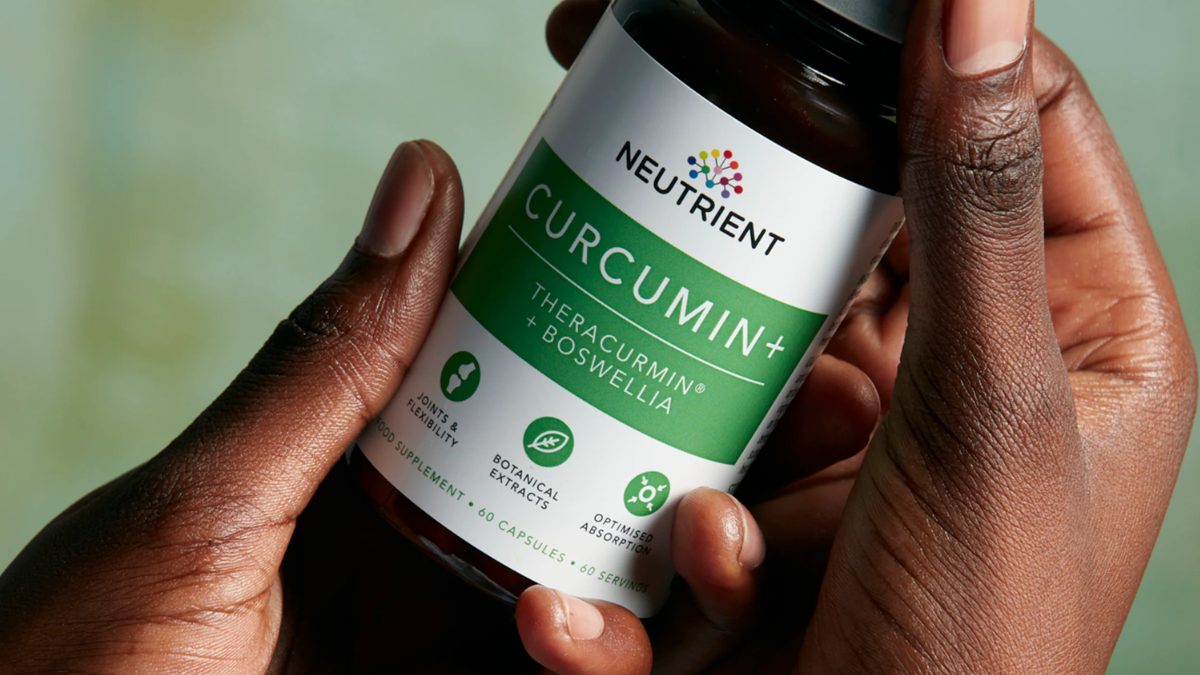
Neutrient Curcumin+ has been formulated with this challenge in mind. It combines Theracurmin®, a patented Japanese colloidal dispersion technology shown to provide substantially greater bioavailability than standard curcumin extracts, with Casperome®, a phytosome-based boswellia extract designed to enhance the absorption of boswellic acids. Together, these patented ingredients provide a convenient, once-daily source of curcumin and boswellia in highly absorbable forms.

What is curcumin? And what is boswellia?
People often ask whether curcumin and turmeric are the same thing. They are closely related but not identical: turmeric (Curcuma longa) is the whole plant root, while curcumin is the principal bioactive compound found within it, responsible for much of the root's vibrant yellow-orange colour. Turmeric belongs to the ginger family and is native to Southeast Asia, with India the world's largest producer. Around 20g of curcumin can be obtained from 1kg of turmeric root, though this varies with growing conditions.
Turmeric has a long history of use in traditional health practices across Asia, particularly in Ayurvedic traditions relating to digestive and inflammatory health. Traditional Indian recipes often combine turmeric with fats and black pepper — a pairing now understood to support curcumin absorption, given curcumin's fat solubility and the bioavailability-enhancing properties of piperine. Over recent decades, curcumin has become the subject of extensive laboratory and clinical research into its antioxidant, anti-inflammatory, neuroprotective and metabolic effects.
The composition of turmeric
Why does bioavailability matter so much? Curcumin is naturally hydrophobic, meaning it does not dissolve easily in water. Because the digestive tract is largely water-based, a significant proportion of standard curcumin may pass through without being absorbed, while much of the absorbed fraction is rapidly metabolised by the liver and intestinal tissues. Improving bioavailability has therefore become a major focus of modern curcumin research — formulations such as Theracurmin® use colloidal dispersion technology to create very small, water-dispersible particles that may enhance absorption compared with standard extracts.
What is boswellia?
Boswellia serrata, commonly known as Indian frankincense, is a deciduous tree native to parts of India, North Africa and the Middle East. The resin from its bark has a long history of use in traditional Ayurvedic and Middle Eastern practices, particularly relating to joint and digestive wellbeing. Modern research has identified a group of compounds within the resin called boswellic acids, which have attracted interest for their potential role in supporting the body's normal inflammatory processes through mechanisms different from those of curcumin.
Boswellia resin naturally contains 11 different boswellic acids, including beta-boswellic acid (B-BA), acetyl-keto-beta-boswellic acid (AKBA) and acetyl-beta-boswellic acid (ABBA). Research suggests these may interact with the 5-lipoxygenase (5-LOX) pathway, involved in producing inflammatory signalling molecules called leukotrienes. Many boswellia extracts are standardised to AKBA content alone, whereas Casperome® is formulated to provide the full natural profile of all 11 boswellic acids, including beta-boswellic acid, which some research suggests may contribute significantly to boswellia's activity.

Food sources of curcumin and boswellia
While diet alone cannot deliver the concentrated amounts of curcumin and boswellic acids provided by Neutrient Curcumin+, the table below gives a sense of the natural sources. Boswellia resin is not a food ingredient, so dietary intake of boswellic acids is not practically achievable through food. Dietary curcumin from food also provides only trace amounts compared with supplemental forms, and is limited by the same absorption challenges that affect standard supplements.
| Food source | Curcumin content | Boswellic acid content |
|---|---|---|
| Turmeric root (fresh) | ~3% curcuminoids | ~2–4% (as dried resin) |
| Turmeric powder (dried) | ~2–9% curcuminoids | ~3–8% (dried resin) |
| Curry powder | ~0.3–3% curcuminoids | Trace amounts in spice blends |
| Golden milk / turmeric latte | Moderate (varies by recipe) | Not a significant source |
| Mustard (as colouring) | Very low (<0.1%) | Not a significant source |
| Frankincense / resin gum | Not applicable | Natural resin source |
Curcumin benefits: what the science says
Curcumin is one of the most extensively researched plant compounds, with studies exploring its effects across a wide range of body systems. While much of the evidence comes from laboratory and preclinical research, a growing number of human clinical studies have investigated its potential role in health and wellbeing. The sections below summarise the areas that have attracted the greatest scientific interest.


Why combine curcumin and boswellia?
Curcumin and boswellia have been studied for their potential to support the body's natural inflammatory response through different but complementary biological pathways. Research suggests curcumin may influence signalling pathways involving NF-kB, COX-2 and iNOS, while boswellic acids have been investigated primarily for their interaction with the 5-LOX pathway, which is involved in producing inflammatory signalling molecules called leukotrienes.
Because these pathways play different roles within the inflammatory response, combining curcumin and boswellia in a single formulation may provide broader nutritional support than either ingredient alone. In short, curcumin targets NF-kB inhibition, COX-2 suppression and iNOS inhibition, while boswellia targets 5-LOX inhibition and leukotriene-pathway modulation — two distinct routes to supporting the body's normal inflammatory processes.
"Curcumin is one of the best-researched botanical ingredients available, but the way it is formulated can make a significant difference to how much is absorbed. In practice, I often recommend enhanced-bioavailability curcumin alongside other dietary and lifestyle measures for clients looking to support joint comfort and overall wellbeing. The inclusion of Casperome® boswellia adds a complementary botanical ingredient with an interesting and growing evidence base."

Six things worth knowing about curcumin


What makes Neutrient Curcumin+ different?
Neutrient Curcumin+ has been formulated with two key considerations in mind. The first is that curcumin's naturally low bioavailability may limit the amount available to the body. The second is that combining highly absorbable forms of curcumin and boswellia may provide complementary nutritional support through different biological pathways. The table below shows how Theracurmin® compares with other curcumin forms on relative bioavailability.
| Food source | Curcumin content | Boswellic acid content |
|---|---|---|
| Turmeric root (fresh) | ~3% curcuminoids | ~2–4% (as dried resin) |
| Turmeric powder (dried) | ~2–9% curcuminoids | ~3–8% (dried resin) |
| Curry powder | ~0.3–3% curcuminoids | Trace amounts in spice blends |
| Golden milk / turmeric latte | Moderate (varies by recipe) | Not a significant source |
| Mustard (as colouring) | Very low (<0.1%) | Not a significant source |
| Frankincense / resin gum | Not applicable | Natural resin source |
The bioavailability problem with standard curcumin
Standard curcumin extracts are naturally difficult to absorb because curcumin has very low water solubility. Studies suggest a large proportion of orally consumed curcumin may pass through the digestive tract without being absorbed, while much of the absorbed fraction is rapidly metabolised. This is one reason formulation technology has become an important area of curcumin research, focused on improving the amount available for absorption.
Theracurmin®: enhanced bioavailability
Theracurmin® is a patented Japanese curcumin formulation developed to improve the dispersion and absorption of curcumin. The technology reduces curcumin into sub-micron particles stabilised within a water-dispersible matrix, helping improve its availability in the digestive tract. Clinical pharmacokinetic studies have reported substantially higher absorption than standard unformulated powder, with published increases ranging from 27-fold to 42-fold depending on the comparator and methodology. It has been investigated in human studies exploring joint comfort, cardiovascular health and cognitive function.
Casperome®: phytosome-delivered boswellia
Casperome® is a patented boswellia extract that uses Phytosome® technology to support the absorption of boswellic acids, combining boswellia extract with phospholipids naturally found in cell membranes. Clinical research has reported higher circulating levels of boswellic acids following Casperome® supplementation compared with standard boswellia extracts. Unlike products focusing primarily on AKBA content, Casperome® is standardised to provide the full spectrum of naturally occurring boswellic acids found in the resin.
Why combine curcumin and boswellia?
Curcumin and boswellia have been studied for their interaction with different but complementary pathways in the body's natural inflammatory response. Curcumin has been investigated primarily in relation to NF-kB and COX-2, while boswellic acids have been studied for their interaction with 5-LOX. Because these pathways play different roles, combining the two in a single formulation may provide broader nutritional support than using either ingredient alone.
Clean formulation
Neutrient Curcumin+ contains no artificial colours, flavours, sweeteners or stimulants and is free from lactose and unnecessary fillers. The HPMC (hydroxypropyl methylcellulose) capsule shell is suitable for vegans, the product has a two-year shelf life and is supplied in recyclable packaging.
| Ingredient | Amount per capsule | Role |
|---|---|---|
| Curcumin as Theracurmin® | 60mg (equiv. to 84g turmeric root) | Patented Japanese colloidal dispersion of sub-micron, water-dispersible curcumin particles — up to 42x more bioavailable than standard curcumin. Studied for antioxidant properties and its potential role in joint, cognitive and metabolic health. |
| Boswellia serrata as Casperome® | 250mg (equiv. to 500mg boswellia resin) | Phytosome-delivered full-spectrum boswellia providing all 11 boswellic acids including beta-boswellic acid — 3–7x higher plasma levels than standard boswellia. Studied for joint, digestive and respiratory wellbeing via 5-LOX pathways. |
| Lecithin (soy) | Excipient | Phospholipid carrier supporting the Phytosome® technology and capsule formulation; provides phosphatidylcholine as a cell-membrane building block. |

Who is Neutrient Curcumin+ for?
Neutrient Curcumin+ is designed for adults looking for a high-quality curcumin and boswellia supplement with enhanced bioavailability. It may be particularly suitable for:
• Individuals looking to support joint comfort and mobility as part of a healthy lifestyle
• Active people and those with physically demanding lifestyles who want nutritional support for recovery and overall wellbeing
• Older adults interested in maintaining mobility, cognitive health and healthy ageing
• Those seeking a high-quality curcumin supplement that uses advanced absorption technology
• Individuals interested in supporting metabolic, cardiovascular or digestive wellbeing as part of a balanced diet and healthy lifestyle
• Anyone wishing to incorporate well-researched botanical ingredients into their daily wellness routine

How to take Neutrient Curcumin+
Take 1 capsule daily, providing 60mg of curcumin as Theracurmin® and 250mg of boswellia as Casperome®. The enhanced-bioavailability forms mean a single, modest-dose capsule is designed to deliver more than much larger doses of standard extracts.
With or after food
Curcumin is fat-soluble, so taking the capsule with a meal containing some fat may further support absorption and comfortable digestion
Any time of day
There is no required time of day. Choose a moment that fits your routine and is easy to remember, such as with breakfast or your main meal
Consistency matters
Botanical ingredients are generally studied with regular, ongoing use. Taking Curcumin+ daily over a sustained period is more in keeping with how it has been researched than occasional use
 Storage

Store in a cool, dry place away from direct sunlight. Use within 6 months of opening. The product has a two-year shelf life and recyclable packaging

How safe is Curcumin+?
Curcumin has been widely studied and is generally considered well tolerated when used at appropriate doses. Human studies have investigated doses considerably higher than those found in Neutrient Curcumin+, which provides 60mg of curcumin as Theracurmin® together with 250mg of boswellia as Casperome®, using enhanced-bioavailability forms developed to improve absorption.
As with any food supplement, individuals taking medication or living with an existing medical condition should seek advice from a healthcare professional before use. Curcumin may interact with anticoagulant medication and may not be suitable for some individuals without professional guidance.
Curcumin+ is not recommended for children under 18 years of age, or during pregnancy or breastfeeding. Store in a cool, dry place away from direct sunlight and use within 6 months of opening.
Disclaimer
Caution: not recommended for people taking anticoagulants, children under 18, or pregnant or breastfeeding women. Consult a healthcare professional before use if you are taking medication or have a medical condition. Food supplements are not a substitute for a varied and balanced diet and a healthy lifestyle. Store in a cool, dry place away from direct sunlight. Use within 6 months of opening.
References
1. Ahmad RS, et al. Biochemistry, safety, pharmacological activities and clinical applications of turmeric: a mechanistic review. Evid Based Complement Alternat Med. 2020:7656919.
2. Akazawa N, et al. Curcumin ingestion and exercise training improve vascular endothelial function in postmenopausal women. Nutr Res. 2012;32(10):795-799.
3. Akbari M, et al. The effects of curcumin on weight loss among patients with metabolic syndrome: a systematic review and meta-analysis. Front Pharmacol. 2019;10:649.
4. Alappat L, Awad AB. Curcumin and obesity: evidence and mechanisms. Nutr Rev. 2010;68(12):729-738.
5. Al-Delaimy WK, et al. Curcumin content of turmeric and curry powders. Nutr Cancer. 2006;55(2):126-131.
7. Alwi I, et al. The effect of curcumin on lipid level in patients with acute coronary syndrome. Acta Med Indones. 2008;40(4):201-210.
8. Anand P, et al. Bioavailability of curcumin: problems and promises. Mol Pharm. 2007;4(6):807-818.
9. Ejaz A, et al. Curcumin inhibits adipogenesis in 3T3-L1 adipocytes and angiogenesis and obesity in C57/BL mice. J Nutr. 2009;139(5):919-925.
11. Amalraj A, et al. A novel highly bioavailable curcumin formulation improves symptoms and diagnostic indicators in rheumatoid arthritis patients. J Med Food. 2017;20(10):1022-1030.
13. Bertuccioli A, et al. Potential role of bioavailable curcumin in weight loss and omental adipose tissue decrease. Eur Rev Med Pharmacol Sci. 2015;19:4195-4202.
14. Brasacchio C, et al. Curcumin and type 2 diabetes mellitus: prevention and treatment. Nutrients. 2019;11(8):1837.
15. Chandan S, et al. Curcumin use in ulcerative colitis: a systematic review and meta-analysis. Ann Gastroenterol. 2020;33(1):53-58.
17. Cox KH, Pipingas A, Scholey AB. Investigation of the effects of solid lipid curcumin on cognition and mood in a healthy older population. J Psychopharmacol. 2015;29:642-651.
18. Daily JW, et al. Efficacy of turmeric extracts and curcumin for alleviating the symptoms of joint arthritis. J Med Food. 2016;19(8):717-729.
20. Jovicic D, et al. Nutritional and health benefits of curcumin. Food Health Dis. 2017;6(1):22-27.
21. Decker KJ. Still gold: turmeric studies are revealing new and surprising benefits. Nutritional Outlook. 2020;23(3).
22. Peschel D, Koerting R, Nass N. Curcumin induces changes in expression of genes involved in cholesterol homeostasis. J Nutr Biochem. 2007;18(2):113-119.
24. Geethanjali A, et al. Analysis of curcumin content of turmeric samples from various states of India. Int J Pharma Chem Res. 2016;2(1):55-62.
29. Hassan F, et al. Curcumin as an alternative epigenetic modulator: mechanism of action and potential effects. Front Genet. 2019;10:514.
30. Hewlings SJ, Kalman DS. Curcumin: a review of its effects on human health. Foods. 2017;6(10):92.
32. Hu Y, et al. Neuroprotective effects of curcumin alleviate lumbar intervertebral disc degeneration. Mol Med Rep. 2017;16:6864-6869.
33. Itoh T, et al. Effective extraction of curcuminoids by grinding turmeric with medium-chain triacylglycerols. Food Sci Technol Res. 2013;19(4):655-659.
34. Klawitter M, et al. Curcuma DMSO extracts and curcumin exhibit anti-inflammatory and anti-catabolic effects on human intervertebral disc cells. J Inflamm. 2012;9(1):29.
37. Li L, Zhang J, Zhang Y. Curcumin in antidepressant treatments: an overview of potential mechanisms. Basic Clin Pharmacol Toxicol. 2020;127:243-253.
38. Lv FH, et al. Effects of curcumin on apoptosis of cardiomyocytes and expression of NF-kB, PPAR-y and Bcl-2 in rats with myocardial infarction injury. Exp Ther Med. 2016;12(6):3877-3884.
41. Pan J, et al. Curcumin inhibition of JNKs prevents dopaminergic neuronal loss in a mouse model of Parkinson's disease. Transl Neurodegener. 2012;1(1):16.
45. Rakotoarisoa M, Angelova A. Amphiphilic nanocarrier systems for curcumin delivery in neurodegenerative disorders. Medicines. 2018;5(4):126.
46. Rahmani S, et al. Treatment of non-alcoholic fatty liver disease with curcumin: a randomized placebo-controlled trial. Phytother Res. 2016;30(9):1540-1548.
47. Ramaholimihaso T, et al. Curcumin in depression: potential mechanisms of action and current evidence. Front Psychiatry. 2020;11:572533.
48. Raman T, et al. Cytoprotective mechanism of action of curcumin against cataract. Pharmacol Rep. 2016;68:561-569.
50. Shabbir U, et al. Curcumin and its derivatives as theranostic agents in Alzheimer's disease. Int J Mol Sci. 2021;22(1):196.
51. Shehzad A, et al. Curcumin in inflammatory diseases. Biofactors. 2013;39(1):69-77.
52. Shen L, et al. Curcumin and ageing. Biofactors. 2013;39(1):133-140.
53. Singh S. Piperine and curcumin as bioavailability enhancers for drugs. J Pharmacol Toxicol. 2020;10(3):1-2.
54. Stankovic I. Curcumin: chemical and technical assessment. 61st JECFA. 2004:1-8.
55. Suskind DL, et al. Tolerability of curcumin in pediatric inflammatory bowel disease. J Pediatr Gastroenterol Nutr. 2013;56(3):277-279.
56. Thorne Research. Monograph: Curcuma longa. Altern Med Rev. 2001;6:S62-66.
59. Vandermolen J, et al. Comparison of Remicade to curcumin for the treatment of Crohn's disease: a systematic review. Complement Ther Med. 2017;33:322-328.
60. Sasaki H, et al. Innovative preparation of curcumin for improved oral bioavailability. Biol Pharm Bull. 2011;34(5):660-665.
61. Comparative pharmacokinetics of Theracurmin, a highly bioavailable curcumin, in healthy adult subjects. PMC9097512; NCT04028739.
62. Gough LA, et al. Casperome/curcumin combination anti-inflammatory mechanisms; Indena Casperome clinical data, Indena SpA.
63. Indena SpA. Casperome: Boswellia Phytosome product monograph and clinical data summary. indena.com.


