



| Groupe | Besoin quotidien type en zinc* |
|---|---|
| Hommes adultes | 9,5 mg/jour |
| Femmes adultes | 7 mg/jour |
| Grossesse | 7–11 mg/jour |
| Allaitement | 11–13 mg/jour |
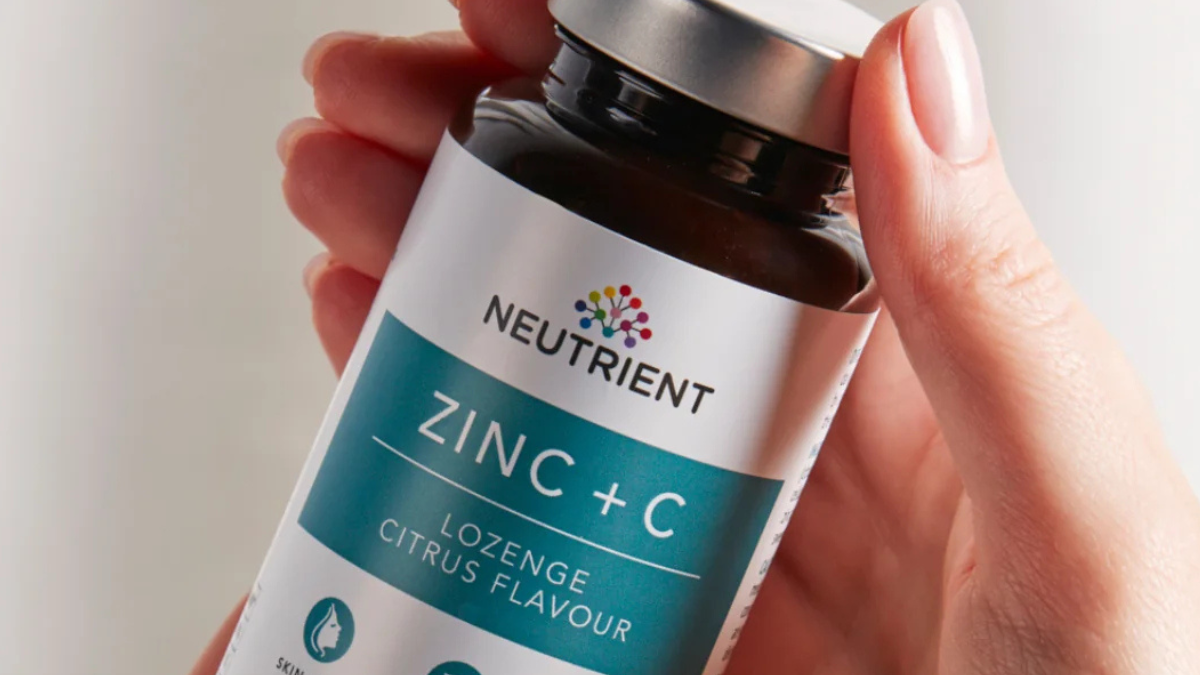
Notre système immunitaire travaille sans relâche pour nous protéger contre les agressions quotidiennes, favorisant la guérison, la réparation et le rétablissement. Pour fonctionner efficacement, il a besoin d'un apport régulier de nutriments essentiels, et deux des plus importants sont le zinc et la vitamine C.
Neutrient Zinc + C réunit ces nutriments reconnus dans une pastille pratique au goût d'agrumes, combinant 10 mg d'acétate de zinc bioactif avec 80 mg de vitamine C tamponnée dans un format à dissolution lente conçu pour libérer les nutriments actifs là où ils sont le plus nécessaires.
Ce guide explore la science derrière ces deux nutriments, explique pourquoi la forme et la méthode d'administration sont importantes, et examine comment Neutrient Zinc + C peut soutenir la santé au quotidien dans le cadre d'un mode de vie équilibré.

Qu'est-ce que le zinc ? Et le rôle de la vitamine C
Le zinc est un oligo-élément essentiel que votre corps ne peut pas produire ou stocker, un apport régulier par l'alimentation ou des suppléments est donc nécessaire. Bien que de petites quantités soient requises, le zinc est impliqué dans plus de 300 réactions enzymatiques qui aident à soutenir de nombreuses fonctions quotidiennes du corps, y compris la santé immunitaire, la réparation de la peau et la fonction cognitive normale. C'est le deuxième oligo-élément le plus abondant dans le corps après le fer, et il est présent dans chaque cellule. Le zinc contribue à la fonction immunitaire normale, à la protection contre le stress oxydatif, à la division cellulaire normale et à la réparation des tissus, à une peau, des cheveux et des ongles sains, à une fonction cognitive normale, à la fertilité et à la reproduction, et au maintien d'un goût, d'un odorat et de muqueuses normaux.
La vitamine C, également connue sous le nom d'acide ascorbique, est l'un des nutriments les plus étudiés. Elle contribue au fonctionnement normal du système immunitaire, aide à protéger les cellules du stress oxydatif, joue un rôle dans la réduction de la fatigue et de l'épuisement, et est nécessaire à la formation du collagène, la protéine structurelle qui soutient la peau, les gencives, le cartilage et les tissus conjonctifs sains. Elle améliore également l'absorption du fer non héminique provenant des aliments végétaux. Comme le zinc, la vitamine C ne peut pas être fabriquée par le corps et doit être obtenue régulièrement. Les deux fonctionnent comme un partenariat complémentaire : le zinc contribue au développement et au fonctionnement des cellules immunitaires, tandis que la vitamine C aide à soutenir leur activité et les protège du stress oxydatif.
De quelle quantité de zinc avez-vous besoin ?
*Basé sur les valeurs de référence alimentaires britanniques et les valeurs nutritives de référence de l'UE. Le corps ne pouvant pas stocker de quantités substantielles de zinc, un apport alimentaire régulier est important. Les besoins peuvent être plus élevés pendant la croissance, la grossesse, l'allaitement, la convalescence, ou lorsque l'apport alimentaire est limité. Les régimes à base de plantes peuvent également fournir moins de zinc facilement absorbable, car les phytates naturellement présents dans les céréales complètes et les légumineuses peuvent réduire l'absorption du zinc. Chaque pastille Neutrient Zinc + C fournit 10 mg de zinc élémentaire — 100 % de la VNR pour adultes — bien en dessous de l'apport maximal sûr généralement accepté d'environ 25 mg par jour toutes sources confondues.
Carence en zinc : signes et personnes à risque
Parce que le zinc est impliqué dans des centaines de processus biologiques, un apport inadéquat peut affecter plusieurs systèmes corporels à la fois. Les signes se développent progressivement et sont souvent non spécifiques, ce qui rend la carence facile à manquer. Les signes possibles d'un statut en zinc inadéquat comprennent une susceptibilité accrue aux infections, des rhumes fréquents ou prolongés, une cicatrisation lente des plaies, une diminution du sens du goût ou de l'odorat, un mauvais appétit, une peau sèche ou enflammée, de l'acné, un amincissement des cheveux, des ongles cassants ou des taches blanches sur les ongles, une mauvaise concentration ou une humeur maussade, de la fatigue et une fertilité réduite.
Les personnes présentant un risque plus élevé de faible statut en zinc comprennent les végétariens et les végétaliens, les personnes âgées, celles atteintes de troubles gastro-intestinaux affectant l'absorption, les personnes qui consomment de l'alcool de manière excessive et celles ayant des besoins accrus, comme pendant la grossesse et l'allaitement. Une carence sévère en zinc est rare au Royaume-Uni, mais une carence légère ou marginale peut être plus fréquente qu'on ne le pense.

Meilleures sources alimentaires de zinc
Une alimentation variée est la meilleure base pour maintenir des niveaux de zinc sains. Les aliments d'origine animale fournissent généralement les formes de zinc les plus facilement absorbées, bien qu'il existe également de nombreuses options à base de plantes. Les phytates naturellement présents dans les céréales complètes, les légumineuses et certaines graines peuvent réduire l'absorption, mais les méthodes de préparation telles que le trempage, la germination ou la fermentation peuvent aider à améliorer la biodisponibilité des aliments végétaux.
| Source alimentaire | Zinc (mg/100 g) | Calories (pour 100 g) |
|---|---|---|
| Huîtres (fraîches) | 91 mg | 67 |
| Germe de blé | 16,7 mg | 360 |
| Anchois | 12,65 mg | 210 |
| Bœuf (maigre) | 11 mg | 268 |
| Graines de courge | 10 mg | 127 |
| Graines de chanvre | 9,9 mg | 553 |
| Crabe | 7,62 mg | 83 |
| Parmesan | 4,2 mg | 451 |
| Avoine | 3,97 mg | 389 |
| Lentilles (crues) | 3,3 mg | 352 |
| Soja (cru) | 3 mg | 147 |
| Tofu | 2 mg | 363 |
| Haricots azuki (crus) | 1,77 mg | 329 |
| Riz complet (cru) | 1,2 mg | 367 |
| Petits pois | 1,19 mg | 81 |
Les nombreux rôles du zinc
L'importance biologique du zinc est étayée par de nombreuses recherches, démontrant sa contribution essentielle à la santé tout au long de la vie. Les sections ci-dessous couvrent les domaines dans lesquels le zinc a été le plus étudié.


Pourquoi une pastille ? La différence de diffusion
Contrairement aux comprimés ou aux gélules, qui sont avalés entiers et absorbés par le tractus gastro-intestinal, une pastille délivre des ions de zinc directement aux tissus de la bouche et de la gorge avant toute déglutition. Cette administration locale a été proposée comme l'une des raisons pour lesquelles les pastilles de zinc ont montré des effets bénéfiques dans les études portant sur la durée des symptômes du rhume.
En revanche, les comprimés et les gélules sont avalés immédiatement et fournissent principalement un soutien nutritionnel systémique après absorption gastro-intestinale. La forme de pastille à dissolution lente de Neutrient Zinc + C est conçue pour libérer progressivement des ions de zinc dans la cavité buccale et la gorge, tout en fournissant 100 % des VNR pour le zinc et la vitamine C pour un soutien nutritionnel quotidien.
« Le zinc est si souvent négligé, et pourtant, il joue un rôle dans des centaines de processus enzymatiques. Je recommande fréquemment cette association pendant les mois d'hiver ou lorsque les clients sont soumis à un stress physique ou émotionnel important, car les deux nutriments peuvent être rapidement épuisés lorsque le système immunitaire travaille dur. J'aime particulièrement associer le zinc à une forme tamponnée de vitamine C, car les deux nutriments agissent en synergie pour soutenir la santé immunitaire au quotidien tout en étant suffisamment doux pour une utilisation régulière. »

Six choses à savoir sur le zinc


La formule Neutrient Zinc + C
L'efficacité d'un supplément dépend non seulement des nutriments qu'il contient, mais aussi des formes sous lesquelles ces nutriments sont délivrés. Les différences de structure chimique, les ingrédients d'accompagnement et le format de livraison influencent tous la performance d'un supplément et son agrément à prendre. Neutrient Zinc + C combine l'acétate de zinc avec de la vitamine C tamponnée dans une pastille d'agrumes à dissolution lente, avec de l'inuline de racine de chicorée comme simple excipient végétal. Chaque ingrédient a été sélectionné pour créer une formulation pratique pour une utilisation quotidienne.
| Ingrédient | Quantité par pastille | Rôle |
|---|---|---|
| Acétate de zinc | 10 mg (soit 10 mg de zinc) | Sel de zinc hautement biodisponible, à l’ionisation supérieure dans la cavité buccale. Soutient la fonction immunitaire, l’intégrité des muqueuses, la santé de la peau et l’activité enzymatique. |
| Ascorbate de magnésium | 80 mg de vitamine C | Forme tamponnée de vitamine C, généralement plus douce pour l’estomac que l’acide ascorbique standard, tout en apportant 80 mg de vitamine C. Soutient la fonction immunitaire, la protection antioxydante et la formation du collagène. |
| Inuline (racine de chicorée) | Support | Fibre prébiotique naturellement présente qui constitue la base de la pastille. Les recherches suggèrent qu’elle pourrait soutenir les bactéries intestinales bénéfiques tout en apportant texture et stabilité. |
| Arôme d’agrumes (naturel) | Arôme | Des arômes 100 % naturels de citron et d’orange rendent la pastille agréable à prendre, ce qui favorise la régularité au quotidien. |
| Stévia | Édulcorant | Édulcorant d’origine naturelle et sans calories. Sans sucre ni édulcorants artificiels. |
Acétate de zinc : le choix bioactif
Neutrient Zinc + C apporte du zinc sous forme d'acétate de zinc, l'une des formes les plus étudiées et utilisées dans les formulations de pastilles. Il libère des ions de zinc libres au fur et à mesure qu'il se dissout, permettant un contact direct avec les tissus de la bouche et de la gorge, ce qui le rend bien adapté à un format de pastille et est la raison principale pour laquelle il a été choisi par rapport à d'autres sels de zinc. Chaque pastille fournit 10 mg de zinc élémentaire, ce qui équivaut à 100 % de la VNR adulte.
Ascorbate de magnésium : une vitamine C plus douce
La vitamine C est le plus souvent fournie sous forme d'acide ascorbique, mais Neutrient Zinc + C utilise de l'ascorbate de magnésium, une forme tamponnée qui combine l'acide ascorbique avec du magnésium pour produire un composé moins acide. Beaucoup de gens trouvent la vitamine C tamponnée plus douce pour l'estomac tout en offrant les mêmes avantages nutritionnels. Chaque pastille fournit 80 mg de vitamine C, soit 100 % des VNR quotidiens. Le magnésium présent n'est pas en quantités suffisantes pour apporter une contribution nutritionnelle significative.
Inuline issue de la racine de chicorée : un support plus intelligent
Le Nutriment Zinc + C utilise de l'inuline de racine de chicorée comme base de pastille végétale. L'inuline est une fibre soluble naturelle et l'une des fibres prébiotiques les plus étudiées : au lieu d'être digérée dans la partie supérieure de l'intestin, elle atteint le gros intestin où elle est fermentée par des bactéries bénéfiques. La recherche suggère qu'elle pourrait aider à soutenir la croissance de bactéries bénéfiques, notamment le Bifidobacterium et le Lactobacillus. Elle confère également une texture lisse et une légère douceur naturelle sans agents de charge artificiels.
Arôme naturel d'agrumes et édulcorant stévia
Un complément n'est utile que si les gens sont heureux de le prendre régulièrement. Neutrient Zinc + C est aromatisé avec un arôme d'agrumes 100% naturel et édulcoré avec de l'extrait de feuille de stévia, un édulcorant d'origine naturelle provenant de la plante Stevia rebaudiana. Cela procure un goût léger et rafraîchissant, sans arômes artificiels ni édulcorants à base de sucre, et rend la pastille adaptée à un large éventail de préférences alimentaires, y compris les régimes végétaliens et végétariens.
| Ingrédient | Quantité par pastille | Rôle |
|---|---|---|
| Acétate de zinc | 10 mg (soit 10 mg de zinc) | Sel de zinc hautement biodisponible, à l’ionisation supérieure dans la cavité buccale. Soutient la fonction immunitaire, l’intégrité des muqueuses, la santé de la peau et l’activité enzymatique. |
| Ascorbate de magnésium | 80 mg de vitamine C | Forme tamponnée de vitamine C, généralement plus douce pour l’estomac que l’acide ascorbique standard, tout en apportant 80 mg de vitamine C. Soutient la fonction immunitaire, la protection antioxydante et la formation du collagène. |
| Inuline (racine de chicorée) | Support | Fibre prébiotique naturellement présente qui constitue la base de la pastille. Les recherches suggèrent qu’elle pourrait soutenir les bactéries intestinales bénéfiques tout en apportant texture et stabilité. |
| Arôme d’agrumes (naturel) | Arôme | Des arômes 100 % naturels de citron et d’orange rendent la pastille agréable à prendre, ce qui favorise la régularité au quotidien. |
| Stévia | Édulcorant | Édulcorant d’origine naturelle et sans calories. Sans sucre ni édulcorants artificiels. |

À qui s'adresse Neutrient Zinc + C ?
Neutrient Zinc + C a été développé comme un supplément quotidien pratique pour les adultes, et peut être particulièrement adapté pour :
• Les personnes souhaitant soutenir une fonction immunitaire normale, car le zinc et la vitamine C contribuent tous deux au fonctionnement normal du système immunitaire
• Les personnes traversant des périodes de stress physique ou émotionnel accru, lorsque les besoins nutritionnels peuvent être plus élevés
• Les végétariens et les végétaliens, dont l'alimentation peut fournir du zinc moins facilement absorbé, car les phytates présents dans les céréales complètes et les légumineuses peuvent réduire l'absorption
• Les personnes ayant l'estomac sensible, car l'ascorbate de magnésium tamponné est généralement plus doux que l'acide ascorbique standard pour de nombreuses personnes
• Ceux qui préfèrent une pastille aux comprimés ou aux capsules, en particulier si l'ingestion de suppléments conventionnels est difficile
• Les personnes recherchant un soutien nutritionnel pendant les mois d'hiver, ou à des moments où le maintien d'un apport adéquat en zinc et en vitamine C est particulièrement important
• Les personnes âgées, qui peuvent avoir un apport alimentaire réduit ou une acidité gastrique plus faible, deux facteurs pouvant affecter l'absorption du zinc
• Les personnes qui consomment régulièrement de l'alcool, car une consommation excessive peut réduire l'absorption du zinc et augmenter les pertes
• Les femmes enceintes ou qui allaitent, dont les besoins en zinc sont accrus — la supplémentation pendant la grossesse doit toujours être discutée avec un professionnel de la santé

Comment utiliser Neutrient Zinc + C
Laisser 1 pastille se dissoudre lentement dans la bouche chaque jour. La forme à dissolution lente est conçue pour libérer progressivement les ions de zinc à travers les tissus de la bouche et de la gorge. Les compléments alimentaires ne doivent pas être utilisés comme substituts d'une alimentation variée et équilibrée et d'un mode de vie sain.

Le zinc est-il sûr ?
Le zinc est un nutriment essentiel qui doit être apporté régulièrement par l'alimentation, car le corps n'a qu'une capacité limitée à le stocker. Consommés aux niveaux recommandés, les compléments de zinc sont considérés comme sûrs pour la plupart des adultes en bonne santé.
Comme pour de nombreux nutriments, plus n'est pas forcément mieux. La consommation prolongée de quantités excessives de zinc peut réduire l'absorption du cuivre et altérer l'équilibre d'autres minéraux.
Chaque pastille Neutrient Zinc + C apporte 10 mg de zinc élémentaire, ce qui équivaut à 100 % des VNR pour adultes. Cette quantité est adaptée à un usage quotidien lorsqu'elle est prise selon les instructions et reste bien en dessous de l'apport maximal sûr généralement accepté d'environ 25 mg par jour toutes sources confondues. Des apports constamment supérieurs à ce niveau sur le long terme peuvent affecter l'absorption du cuivre.
Avertissement
Convient aux adultes. Ne pas dépasser l'apport quotidien recommandé. Tenez compte de votre apport total en zinc provenant des aliments et des compléments ; les apports à long terme supérieurs à environ 25 mg par jour, toutes sources confondues, ne sont pas recommandés sans surveillance professionnelle. Si vous êtes enceinte, si vous allaitez, si vous prenez des médicaments ou si vous êtes sous surveillance médicale, consultez un professionnel de la santé avant utilisation. Tenir hors de portée des jeunes enfants. Les compléments alimentaires ne se substituent pas à une alimentation variée et équilibrée et à un mode de vie sain.
Références
1. Office of Dietary Supplements, NIH. Zinc: Fiche d'information pour les professionnels de la santé. ods.od.nih.gov (Consulté en juin 2026).
2. Prasad AS. Le zinc dans la santé humaine : effet du zinc sur les cellules immunitaires. Mol Med. 2008;14(5-6):353-357.
3. Wessels I, Maywald M, Rink L. Le zinc en tant que gardien de la fonction immunitaire. Nutrients. 2017;9(12):1286.
4. Carr AC, Maggini S. Vitamine C et fonction immunitaire. Nutrients. 2017;9(11):1211.
5. Science M, et al. Le zinc pour le traitement du rhume : une revue systématique et une méta-analyse d'essais contrôlés randomisés. CMAJ. 2012;184(10):E551-E561.
6. Hemila H. Pastilles de zinc et rhume : une méta-analyse comparant l'acétate de zinc et le gluconate de zinc. JRSM Open. 2017;8(5):2054270417694291.
7. Kelly GS. Prébiotiques de type inuline : une revue (Partie 1). Altern Med Rev. 2009;14(1):36-55.
8. Kawamura T, et al. Le rôle du zinc dans les troubles cutanés. Nutrients. 2018;10(2):199.
9. Fleming Marsh A, et al. Niveaux de zinc sérique et efficacité du traitement au zinc dans l'acné vulgaire : une revue systématique et une méta-analyse. Dermatol Ther. 2020;33:e14252.
10. Melnik BC. Lien entre l'alimentation et la métabolomique de l'acné, l'inflammation et la comédogenèse : une mise à jour. Clin Cosmet Investig Dermatol. 2015;8:371-388.
11. Lansdown ABG, et al. Le zinc dans la cicatrisation des plaies : aspects théoriques, expérimentaux et cliniques. Wound Repair Regen. 2007;15:2-16.
12. Powell SR. Les propriétés antioxydantes du zinc. J Nutr. 2000;130(5 Suppl):1447S-1454S.
13. Cong X, et al. Le rôle du zinc dans les troubles de l'humeur. Neuropsychiatry. 2017;7(4):378-386.
14. Szewczyk B. Homéostasie du zinc et troubles neurodégénératifs. Front Aging Neurosci. 2013;5:33.
15. Thompson JM, et al. Le rôle des micronutriments dans l'alopécie areata : une revue. Am J Clin Dermatol. 2017;18(5):663-679.
16. Yoshida K, et al. Rôles physiologiques de la séménogéline I et du zinc dans la motilité des spermatozoïdes et la coagulation du sperme. Mol Hum Reprod. 2008;14(3):151-156.
17. Zhao J, et al. Niveaux de zinc dans le plasma séminal et leur corrélation avec l'infertilité masculine : une revue systématique et une méta-analyse. Sci Rep. 2016;6:22386.
18. Ebisch IMW, et al. L'importance du folate, du zinc et des antioxydants dans la pathogenèse et la prévention de la sous-fertilité. Hum Reprod Update. 2007;13(2):163-174.
19. Tian X, Diaz FJ. Une carence alimentaire aiguë en zinc avant la conception compromet la programmation épigénétique des ovocytes et perturbe le développement embryonnaire. Dev Biol. 2013;376:51-61.
20. Emri E, et al. Nutrition en zinc et inflammation dans la rétine vieillissante. Mol Nutr Food Res. 2019;63:e1801049.
21. Evans JR. Suppléments vitaminiques et minéraux antioxydants pour ralentir la progression de la DMLA. Cochrane Database Syst Rev. 2006;(2):CD000254.
22. Khorsandi H, et al. La supplémentation en zinc améliore la gestion du poids corporel, les biomarqueurs inflammatoires et la résistance à l'insuline dans l'obésité. Diabetol Metab Syndr. 2019;11:101.
23. Wessells KR, et al. Estimation de la prévalence mondiale d'un apport insuffisant en zinc à partir des bilans alimentaires nationaux. PLoS ONE. 2012;7:e50565.
24. Prasad AS. Carence en zinc. BMJ. 2003;326:409-410.
25. Linus Pauling Institute. Zinc. Université d'État de l'Oregon. lpi.oregonstate.edu (Consulté en juin 2026).
26. NHS Whittington Health. À propos du zinc et de la carence en zinc. whittington.nhs.uk (Consulté en juin 2026).
27. Ibs KH, Rink L. Fonction immunitaire altérée par le zinc. J Nutr. 2003;133(5):1452S-1456S.
28. Yamaguchi M. Rôle du zinc dans la formation et la résorption osseuses. J Trace Elem Exp Med. 1998;11:119-135.
29. Brewer GJ. Acétate de zinc pour le traitement de la maladie de Wilson. Expert Opin Pharmacother. 2001;2(9):1473-1477.
30. Costa MI, Sarmento-Ribeiro AB, Goncalves AC. Zinc : des fonctions biologiques au potentiel thérapeutique. Int J Mol Sci. 2023;24(5):4822.
31. Office of Dietary Supplements, NIH. Vitamine C : Fiche d'information pour les professionnels de la santé. ods.od.nih.gov (Consulté en juin 2026).
32. Hemila H, Chalker E. Vitamine C pour la prévention et le traitement du rhume. Cochrane Database Syst Rev. 2013;(1):CD000980.


