



| Approche | Dose | Remarques |
|---|---|---|
| Entretien quotidien (recommandé) | 3–5 g par jour | Les réserves musculaires de créatine augmentent progressivement et atteignent généralement une quasi-saturation après environ 3–4 semaines |
| Protocole de charge (facultatif) | 20 g par jour pendant 5–7 jours, puis 3–5 g en entretien | Les réserves musculaires peuvent se saturer plus rapidement, avec des effets souvent perceptibles dès la première semaine |
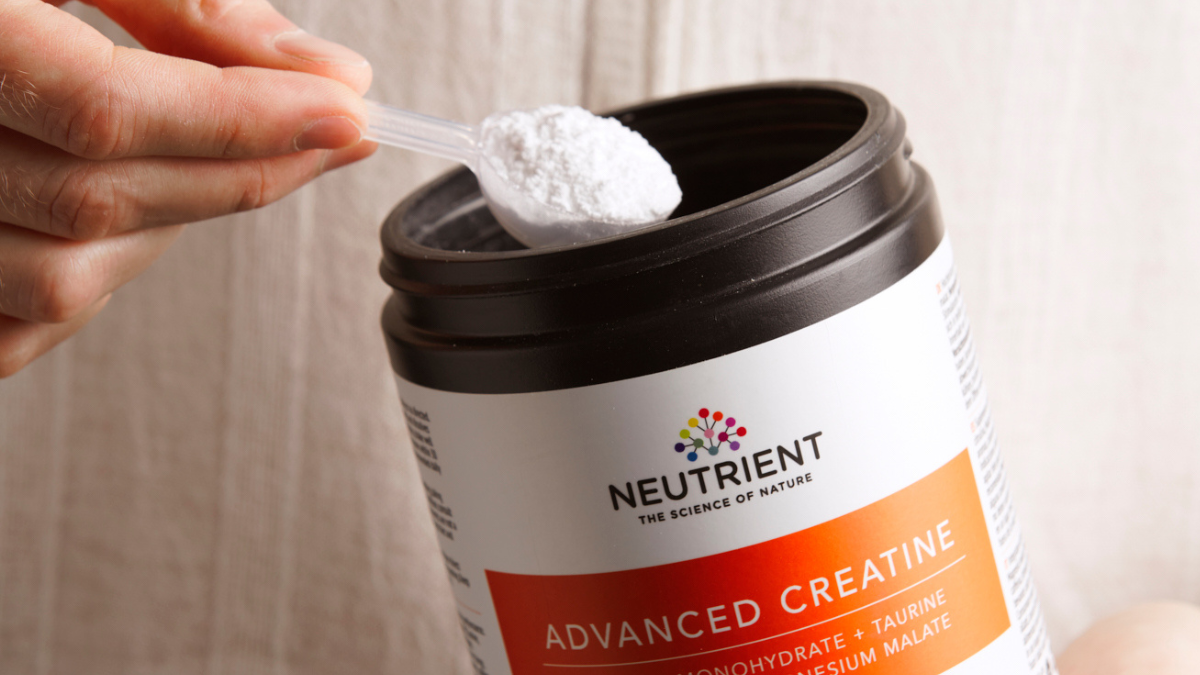
La créatine est l'un des ingrédients les plus étudiés en nutrition sportive. Produite naturellement par le corps et présente en petites quantités dans des aliments tels que la viande rouge et le poisson, elle joue un rôle important dans la production rapide d'énergie cellulaire, en particulier lors de courtes périodes d'activité physique intense.
Au cours des trois dernières décennies, la recherche a constamment montré que la supplémentation en créatine monohydrate peut favoriser la force, la puissance, les performances sportives et la récupération lorsqu'elle est associée à un entraînement régulier. Plus récemment, l'intérêt s'est étendu au-delà des athlètes, les chercheurs explorant le rôle que la créatine pourrait jouer dans le soutien du vieillissement en bonne santé, de la fonction musculaire et des performances physiques tout au long de l'âge adulte.
Malgré sa base de preuves solide, de nombreux produits à base de créatine ne contiennent qu'un seul ingrédient. Neutrient Advanced Creatine adopte une approche plus large, combinant de la créatine monohydrate micronisée 200 mesh avec du malate de citrulline, de la taurine et du malate de magnésium. Chaque ingrédient a été sélectionné pour son rôle complémentaire dans le soutien des performances physiques, du métabolisme énergétique, de la fonction musculaire et de la récupération.

Qu'est-ce que la créatine ?
La créatine est un composé naturel présent dans tout le corps, particulièrement dans les muscles squelettiques, où elle joue un rôle important dans la production d'énergie. Elle est synthétisée à partir des acides aminés glycine, arginine et méthionine et est impliquée dans la régénération rapide de l'ATP (adénosine triphosphate), la principale monnaie énergétique du corps.
Environ 95 % de la créatine du corps est stockée dans les muscles squelettiques, principalement sous forme de phosphocréatine, les 5 % restants se trouvant dans le cœur et le cerveau. Au repos, les réserves de phosphocréatine sont reconstituées ; lorsque l'activité physique augmente soudainement, la phosphocréatine peut être mobilisée presque immédiatement pour aider à régénérer l'ATP.
Le corps produit naturellement environ 1 à 2 g de créatine par jour, principalement dans le foie. Le reste provient de l'alimentation – presque exclusivement de sources animales telles que la viande rouge et les poissons gras. Les personnes suivant un régime végétarien ou végétalien ont généralement des réserves de créatine plus faibles.
Le plus important est la constance. La créatine agit en augmentant progressivement les réserves de phosphocréatine musculaire au fil du temps. Une utilisation quotidienne régulière est généralement considérée comme plus importante que le moment précis ou les protocoles de cyclage.
Créatine et régimes à base de plantes
Le fait que la créatine se trouve presque exclusivement dans les aliments d'origine animale explique que les personnes suivant un régime végétarien ou végétalien en consomment généralement peu ou pas. La recherche a constamment démontré que les végétariens et les végétaliens ont tendance à avoir des réserves de créatine musculaire de base plus faibles que les consommateurs de viande. La réponse à la supplémentation est souvent la plus forte chez ceux qui partent de niveaux plus bas, ce qui rend la créatine monohydrate particulièrement efficace pour les personnes suivant un régime végétal. Neutrient Advanced Creatine convient aussi bien aux végétariens qu'aux végétaliens — la créatine monohydrate est produite synthétiquement et ne contient aucun ingrédient d'origine animale.

Sources alimentaires de créatine
Bien que le corps produise de la créatine et qu'elle puisse être obtenue par l'alimentation, les quantités apportées par le régime sont généralement insuffisantes pour saturer les réserves musculaires. Pour égaler une portion standard de 5g de supplément, il faudrait environ 250 à 500g de bœuf cru ou de hareng par jour. Pour les végétariens et les végétaliens, atteindre un apport significatif en créatine par l'alimentation est encore plus difficile car les aliments végétaux ne contiennent pratiquement pas de créatine.
| Source alimentaire | Créatine (pour 100 g) | Remarques |
|---|---|---|
| Bœuf (cru) | 1,0–2,0 g | L’une des sources naturelles les plus riches |
| Hareng (cru) | 1,0–1,5 g | Teneur élevée ; moins couramment consommé |
| Saumon (cru) | ~1,0 g | Excellente source, également riche en oméga-3 |
| Porc (cru) | 0,4–1,0 g | Variable selon le morceau |
| Poulet (cru) | ~0,4 g | Teneur inférieure à celle de la viande rouge ou des poissons gras |
| Thon (cru) | 0,4 g | Source utile pour les consommateurs de poisson |
| Œufs et produits laitiers | Négligeable | Ne constituent pas des sources alimentaires fiables de créatine |
| Aliments végétaux | Aucune | Les légumes, céréales et légumineuses ne contiennent pas de créatine |
Bénéfices potentiels de la créatine
Les bienfaits de la créatine ont été étudiés de manière approfondie sur un large éventail de populations, des athlètes d'élite et des sportifs occasionnels aux personnes âgées. Si la créatine est surtout connue pour favoriser la force et la performance physique, les recherches suggèrent que ses effets pourraient s'étendre au maintien musculaire, à la récupération et au métabolisme énergétique. La créatine n'est pas un raccourci vers les résultats — elle agit en soutenant les systèmes énergétiques naturels du corps.


Qu'est-ce qui distingue Advanced Creatine ?
De nombreux compléments de créatine ne contiennent que de la créatine monohydrate. Bien que la créatine reste la base de cette formule, Neutrient Advanced Creatine adopte une approche plus large en combinant la créatine avec des ingrédients complémentaires soigneusement sélectionnés qui soutiennent la performance physique, la fonction musculaire, le métabolisme énergétique et la récupération.
La formule avancée de créatine
Chaque ingrédient a été sélectionné pour son rôle spécifique dans le soutien des performances à l'exercice, du métabolisme énergétique, de la fonction musculaire et de la récupération. La formule combine quatre ingrédients actifs en une seule portion de poudre pratique.
| Ingrédient | Quantité par dose | Rôle |
|---|---|---|
| Créatine monohydrate 200 mesh | 5 g | Créatine micronisée pour une solubilité supérieure. Reconstitue les réserves de phosphocréatine pour une régénération rapide de l’ATP lors des efforts de haute intensité. |
| Citrulline malate | 1 g | Soutient la production d’oxyde nitrique pour un meilleur flux sanguin, favorise la production d’ATP via le cycle de Krebs et peut aider à réduire les courbatures après l’effort. |
| Taurine | 1 g | Soutient la contraction musculaire, l’équilibre électrolytique, la protection antioxydante et la récupération après l’effort. L’un des acides aminés les plus concentrés dans le muscle squelettique. |
| Malate de magnésium | 30 mg | Contribue à une fonction musculaire normale, à la réduction de la fatigue, à la synthèse des protéines et à l’équilibre électrolytique. L’acide malique joue un rôle direct dans le cycle de Krebs. |
Créatine monohydrate 200 mesh
La forme de créatine de référence, micronisée à une taille de particule de 200 mesh pour une excellente miscibilité, une granulométrie réduite et une boisson plus douce. La recherche continue de soutenir la créatine monohydrate comme la forme la plus étudiée et la plus largement utilisée disponible.
Citrulline malate : flux sanguin et performance
La citrulline est convertie en arginine, qui produit de l'oxyde nitrique pour aider à réguler la dilatation des vaisseaux sanguins pendant l'exercice. Des recherches suggèrent qu'elle pourrait améliorer les performances physiques, l'endurance musculaire, le volume d'entraînement et la récupération perçue après l'exercice.
Taurine : fonction musculaire et récupération
Un des acides aminés les plus abondants dans le corps, concentré dans les muscles squelettiques. Impliqué dans l'hydratation cellulaire, l'équilibre électrolytique, la fonction musculaire, la récupération après l'exercice et la défense antioxydante. Des recherches émergentes suggèrent qu'il pourrait soutenir la capacité à l'exercice et la récupération lorsqu'il est combiné à un entraînement structuré.
Malate de magnésium : énergie et fonction musculaire
Un minéral essentiel impliqué dans des centaines de réactions enzymatiques. Contribue à une fonction musculaire normale, au métabolisme énergétique, à l'équilibre électrolytique, à la synthèse des protéines et à la réduction de la fatigue. Les personnes physiquement actives peuvent avoir des besoins accrus en raison des pertes dues à la transpiration.
Pourquoi une poudre ?
La poudre permet d’apporter des quantités significatives de créatine et d’ingrédients de soutien en une seule portion, avec la possibilité d’ajuster les tailles de portion, de mélanger avec de l’eau, du jus ou des shakes protéinés, et d’intégrer facilement la supplémentation dans les routines quotidiennes. Les produits sous forme de capsules nécessitent souvent plusieurs capsules par portion pour atteindre un apport quotidien efficace.

À qui s'adresse l'Advanced Creatine ?
La créatine avancée Neutrient est conçue pour toute personne souhaitant améliorer ses performances, sa récupération et son bien-être. Elle est particulièrement adaptée aux personnes suivantes :
• Entraîneurs de force et de résistance cherchant à soutenir la force, la puissance et la performance à l'entraînement
• Athlètes d'endurance — coureurs, cyclistes et autres cherchant à soutenir la récupération et la capacité d'entraînement
• Athlètes de sports d'équipe impliqués dans des sports nécessitant des efforts intenses répétés
• Adultes actifs cherchant à soutenir la fonction musculaire, la performance physique et un mode de vie actif en vieillissant
• Végétariens et végétaliens qui consomment peu ou pas de créatine alimentaire et ont généralement des réserves de base plus faibles
• Femmes pendant et après la ménopause qui subissent des changements liés à l'âge dans la masse musculaire, la force ou la capacité d'exercice

Comment prendre de la créatine avancée
Mélanger une portion (environ 8 g) avec 200 à 300 ml d'eau, de jus ou de votre boisson préférée. Bien remuer ou agiter. Prendre une fois par jour, de préférence après l'exercice ou avec un repas. Les jours de repos, prendre à tout moment opportun.
Après l'exercice
Plusieurs études suggèrent qu'après l'exercice, il pourrait y avoir un léger avantage, particulièrement avec l'entraînement en résistance, car les muscles pourraient être plus réceptifs à l'absorption des nutriments après l'entraînement
Avec la nourriture
La prise de créatine au cours d'un repas peut favoriser son absorption par les cellules musculaires, en particulier en présence de glucides
Phase de charge
En cas d'utilisation d'un protocole de charge (20 g/jour pendant 5 à 7 jours), répartir en quatre portions de 5 g tout au long de la journée pour un meilleur confort. Une phase de charge est facultative – 3 à 5 g par jour permettent d'atteindre des niveaux similaires sur 3 à 4 semaines
Jours de repos
À prendre à tout moment opportun — la priorité est de maintenir la saturation musculaire plutôt que l'effet immédiat
La cohérence est importante
L'utilisation quotidienne est plus importante que le moment précis. La créatine agit en augmentant progressivement les réserves de phosphocréatine dans les muscles. Une supplémentation régulière maintient des niveaux élevés au fil du temps

La créatine est-elle sûre ?
La créatine figure parmi les compléments alimentaires les plus étudiés, avec des décennies de recherches scientifiques confirmant son innocuité lorsqu'elle est utilisée de manière appropriée chez des personnes en bonne santé. De nombreuses revues et déclarations de position d'organisations scientifiques ont conclu que le monohydrate de créatine est généralement sûr lorsqu'il est consommé aux doses recommandées.
Certaines personnes peuvent ressentir un léger inconfort digestif si de grandes quantités sont consommées en une seule fois. Répartir les doses tout au long de la journée, en particulier pendant une phase de charge, peut aider à minimiser cet inconfort.
Les mythes courants concernant la créatine — dommages rénaux, déshydratation, besoin de faire des cycles et perte de cheveux — ne sont pas étayés par les preuves actuelles. Une augmentation de la créatinine n'indique pas de dommages rénaux. La créatine augmente la teneur en eau des cellules musculaires plutôt que de provoquer une déshydratation. Il n'y a pas de nécessité établie de faire des cycles. Et les revues actuelles n'ont pas établi de relation de cause à effet entre la créatine et la perte de cheveux.
Avertissement
Les compléments alimentaires ne remplacent pas une alimentation variée et un mode de vie sain. Consultez un professionnel de la santé avant utilisation si vous souffrez d'une maladie rénale préexistante, si vous êtes enceinte, si vous allaitez ou si vous prenez des médicaments. Ne convient pas aux personnes de moins de 18 ans sans avis médical.
Références
1. Kreider RB et al. International Society of Sports Nutrition position stand: safety and efficacy of creatine supplementation in exercise, sport, and medicine. J Int Soc Sports Nutr. 2017;14(1):18.
2. Jagim AR et al. Safety of creatine supplementation in active adolescents and youth: a brief review. Front Nutr. 2018;5:115.
3. Kreider RB et al. Safety of creatine supplementation: analysis of the prevalence of reported side effects in clinical trials and adverse event reports. J Int Soc Sports Nutr. 2025;22(Suppl 1).
4. Forbes SC, Candow DG. Timing of Creatine Supplementation and Resistance Training: A Brief Review. J Exercise Nutr. 2018;1(15):1-6.
5. Ribeiro F et al. Timing of Creatine Supplementation around Exercise: A Real Concern? Nutrients. 2021;13(8):2844.
6. Cooper R et al. Creatine supplementation with specific view to exercise/sports performance: an update. J Int Soc Sports Nutr. 2012;9:33.
7. Antonio J, Ciccone V. The effects of pre versus post workout supplementation of creatine monohydrate on body composition and strength. J Int Soc Sports Nutr. 2013;10:36.
8. Antonio J et al. Common questions and misconceptions about creatine supplementation: what does the scientific evidence really show? J Int Soc Sports Nutr. 2021;18:13.
9. Gough LA et al. A critical review of citrulline malate supplementation and exercise performance. Eur J Appl Physiol. 2021;121(12):3283-3295.
10. Waldron M et al. Taurine in sports and exercise. J Int Soc Sports Nutr. 2021;18:39.
11. de Baaij JHF et al. Magnesium in man: implications for health and disease. Physiol Rev. 2015;95(1):1-46.


