



| Source alimentaire | Collagène approximatif (pour 100 g) | Remarques |
|---|---|
| Bouillon d’os maison (240 ml) | ~2,5–5 g | Très variable selon les os utilisés et le temps de cuisson |
| Couenne de porc | ~3–5 g | L’une des sources alimentaires les plus riches ; utilisée dans la gélatine traditionnelle |
| Bœuf (cru) | ~2–3 g | Riche en Types I et III ; teneur plus élevée dans les morceaux à tissu conjonctif |
| Peau/cartilage de poulet | ~1–4 g | Particulièrement riche en collagène de Type II autour du cartilage |
| Poisson (avec la peau, cuit) | ~0,5–2 g | Source marine de Type I ; teneur plus élevée dans les poissons gras |
| Blancs d’œufs | ~0,5 g | Contiennent de la proline, un acide aminé précurseur clé du collagène |
| Poivrons rouges et jaunes | Riches en vitamine C | Essentielle à la synthèse du collagène — pas une source directe |
| Agrumes | Riches en vitamine C | Soutiennent la production de collagène par l’action cofacteur de la vitamine C |
| Aliments végétaux | Aucun | Certains apportent des acides aminés précurseurs ; aucun collagène directement |
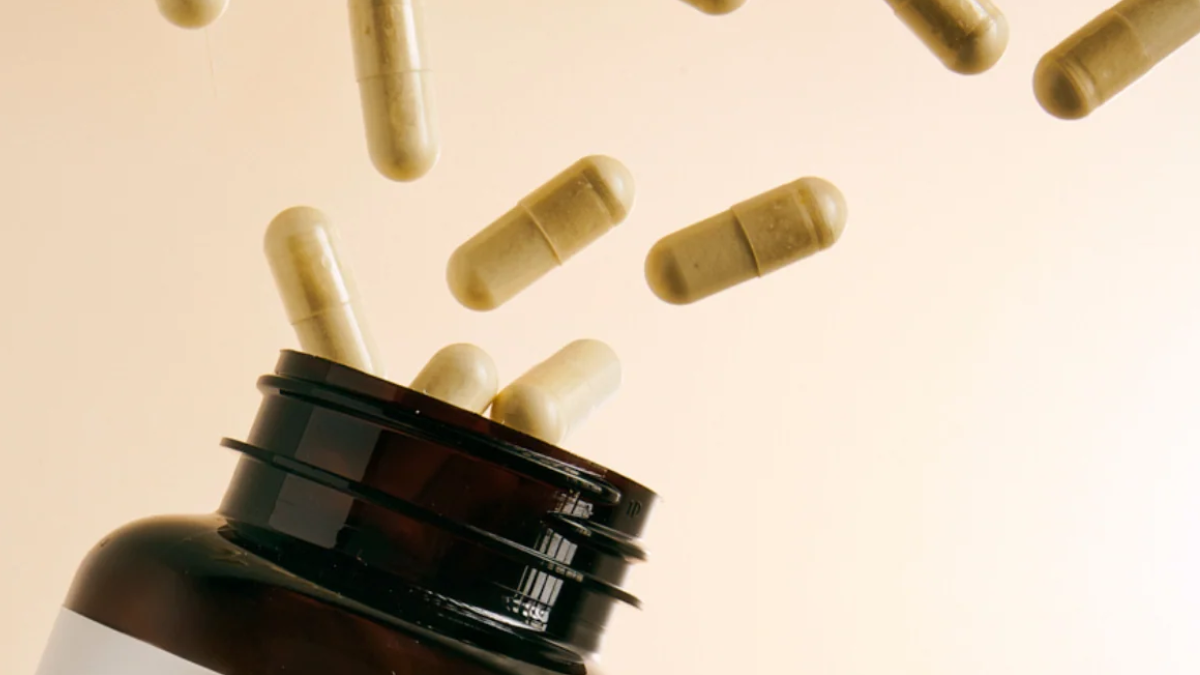
La vitamine C est l'un des nutriments les plus étudiés au monde, et ce n'est pas sans raison. Elle contribue à de multiples aspects de la santé, notamment la fonction immunitaire, le métabolisme énergétique, la formation de collagène, l'humeur et la protection antioxydante. Pourtant, bien qu'elle soit si connue, la plupart des suppléments de vitamine C n'en fournissent qu'une seule forme.
La limitation d'une seule forme hydrosoluble est que sa distribution est largement confinée aux environnements aqueux du corps. Elle ne s'intègre pas dans les structures riches en lipides de la même manière que les formes liposolubles telles que l'ascorbyl palmitate. Votre corps n'est pas seulement un environnement aqueux; il contient également des tissus adipeux, des membranes cellulaires et d'autres compartiments riches en lipides où les dérivés de la vitamine C liposolubles peuvent présenter des avantages par rapport aux formes hydrosolubles. De plus, des doses plus élevées d'acide ascorbique sont plus susceptibles de provoquer des troubles gastro-intestinaux chez certaines personnes; les ascorbates minéraux tamponnés sont souvent mieux tolérés à des doses équivalentes.
Neutrient Total C a été créé pour résoudre ces deux problèmes. En combinant cinq formes de vitamine C, y compris la seule forme liposoluble, avec trois ingrédients supplémentaires qui amplifient ses effets et étendent sa portée, Total C est conçu pour fournir un soutien en vitamine C dans les environnements aqueux et riches en lipides du corps.
Ce guide explique ce que la science dit de la vitamine C, pourquoi les différentes formes sont importantes et comment chaque ingrédient de Total C a été choisi.

Qu'est-ce que la vitamine C ?
La vitamine C est une vitamine hydrosoluble et l'un des nutriments les plus importants de votre corps, avec des avantages qui s'étendent à l'immunité, à la peau, à l'énergie, à l'humeur et à la santé cardiovasculaire. Votre corps ne peut pas la produire seul. Contrairement à la plupart des mammifères, les humains ont perdu la capacité de synthétiser la vitamine C il y a des milliers d'années, ce qui signifie que nous dépendons entièrement de ce que nous mangeons et des suppléments pour maintenir nos niveaux.
Chimiquement, c'est un puissant antioxydant, mais cette seule description ne rend pas compte de tout ce qu'elle fait. La vitamine C est impliquée dans au moins huit réactions spécifiques pilotées par des enzymes dans le corps. Elle contribue à la formation du collagène (la protéine qui maintient votre corps ensemble), à la production de neurotransmetteurs qui régulent votre humeur et votre énergie, à la fonction de votre système immunitaire et à la protection des cellules dans tout le corps contre les dommages oxydatifs.⁸˒¹¹
L'apport de référence de l'UE pour la vitamine C est de 80 mg par jour. Mais de nombreux experts et praticiens considèrent cela comme un minimum, et non un plafond, en particulier en cas de stress, de maladie, d'exercice intense ou de pollution environnementale, qui peuvent tous augmenter les besoins en vitamine C.⁷˒¹¹
De quelle quantité avez-vous besoin ?
L'apport nutritionnel de référence (ANR) officiel au Royaume-Uni est de 40 mg par jour, et la valeur nutritionnelle de référence (VNR) de l'UE est de 80 mg. Ce sont les niveaux nécessaires pour prévenir les carences chez la plupart des gens, mais de nombreux praticiens de la nutrition les considèrent comme conservateurs, en particulier face aux facteurs qui augmentent le renouvellement de la vitamine C.
Le tabagisme augmente de manière significative le renouvellement et les besoins en vitamine C, car la fumée de tabac génère un stress oxydatif qui consomme la vitamine C.¹⁵ Les personnes soumises à un stress chronique, se remettant d'une intervention chirurgicale ou vivant dans un environnement très pollué peuvent avoir des besoins accrus en vitamine C.⁴˒⁷˒¹¹
Qui est le plus à risque de carence en vitamine C ?
La carence avérée en vitamine C (scorbut) est aujourd'hui rare, mais un statut faible ou suboptimal en vitamine C est plus courant que beaucoup ne le pensent. Vous pourriez être à risque si vous :⁷˒¹¹˒¹⁵˒²¹
• Fumez ou êtes régulièrement exposé à la fumée secondaire
• Êtes âgé, surtout si votre alimentation est limitée
Vivez avec un stress chronique ou une lourde charge de travail
• Vous entraînez ou faites de l'exercice intensément de façon régulière
• Souffrez d'une affection digestive qui affecte l'absorption
• Avez une alimentation riche en aliments transformés ou cuits
• Vivez dans une ville avec une forte exposition à la pollution
• Êtes en convalescence après une intervention chirurgicale, une maladie ou une blessure
• Buvez de l'alcool régulièrement
Les signes courants d'un faible statut en vitamine C comprennent une fatigue persistante, des infections fréquentes, une cicatrisation lente, des saignements des gencives, des ecchymoses faciles, une peau rugueuse ou sèche et des changements d'humeur. Ces symptômes sont souvent subtils et faciles à attribuer à d'autres causes.

Les meilleures sources alimentaires de vitamine C
La vitamine C est concentrée dans les fruits et légumes frais. Savoir quels aliments riches en vitamine C inclure dans votre régime alimentaire fait une réelle différence, bien que les niveaux puissent varier considérablement avec la cuisson, le stockage et la transformation : l'ébullition peut détruire plus de 50 % de la vitamine C dans les légumes.
Même avec une bonne alimentation, obtenir les doses plus élevées de vitamine C associées au soutien immunitaire et à la santé de la peau uniquement par l'alimentation est un défi. Une portion de 750 mg nécessiterait de manger environ 15 grosses oranges, c'est pourquoi un supplément de vitamine C de haute qualité ajoute une valeur pratique en complément d'une bonne alimentation.
| Source alimentaire | Vitamine C (mg/100 g) | Remarques |
|---|---|---|
| Cynorrhodons (frais) | 250-800 | La source alimentaire la plus riche |
| Jus de citron frais | 240 | Apporte aussi des bioflavonoïdes en plus de la vitamine C |
| Poivrons rouges et jaunes | 150-200 | Plus riches en vitamine C que les oranges |
| Cassis | 150-200 | Également riche en anthocyanes |
| Choux de Bruxelles | 100-120 | À consommer de préférence légèrement vapeur, non bouillis |
| Brocoli | 90-150 | Cru ou légèrement vapeur, il conserve l’essentiel de sa vitamine C |
| Fraises | 40-90 | Apportent aussi du folate et du manganèse |
| Chou-fleur | 50-70 | À consommer cru ou peu cuit |
| Oranges | 50 | Le fruit entier vaut mieux que le jus (qui perd vite sa vitamine C) |
| Épinards (crus) | 35-40 | La cuisson réduit fortement la teneur en vitamine C |
| Tomates | 10-40 | Moins riches en vitamine C mais riches en lycopène |
| Pommes de terre (crues) | 10-30 | Bien moins une fois cuites |
À quoi sert la vitamine C ?
Les gens demandent souvent ce qu'est la vitamine C et à quoi elle sert. La réponse est vaste : elle contribue à plus de dix fonctions physiologiques distinctes, chacune étayée par des décennies de recherche clinique.


Pourquoi cinq formes ? La différence Total C
La plupart des comprimés et des compléments de vitamine C ne contiennent qu’une seule forme : l’acide ascorbique. Son absorption rapide est utile, mais il présente deux limites importantes. Premièrement, il est acide, et à des doses plus élevées, cette acidité peut irriter la paroi intestinale, provoquant des troubles digestifs et limitant la quantité que vous pouvez prendre confortablement.
Deuxièmement, et plus fondamentalement, il est uniquement hydrosoluble, ce qui signifie qu’il ne peut pas accéder aux environnements gras du corps : les membranes cellulaires, la couche lipidique de la peau et d’autres structures riches en lipides.
L’approche des cinq formes a été conçue pour remédier à ces deux limites. Les ascorbates minéraux — ascorbate de sodium, de magnésium et de zinc — sont des formes tamponnées qui procurent la même activité de la vitamine C que l’acide ascorbique, mais sans l’acidité, ce qui les rend bien tolérés à des doses plus élevées.
L’ascorbyl palmitate est une forme liposoluble qui peut s’incorporer dans les environnements lipidiques tels que les membranes cellulaires, augmentant potentiellement la présence de vitamine C dans ces compartiments par rapport aux formes hydrosolubles.
En outre, Total C comprend la BioPerine® et la DHQuercetin, qui n’apportent pas seulement leurs propres bienfaits : elles peuvent améliorer l’utilisation de la vitamine C et compléter son activité antioxydante.²־³־¹⁰
"J'ai créé Total C parce que je voulais une formule de vitamine C qui agisse plus efficacement pour le corps. En incluant des formes hydrosolubles et liposolubles de vitamine C, et en ajoutant du BioPerine® et de la DHQuercetin pour soutenir de manière synergique l'absorption et l'efficacité de la vitamine C, Total C a été conçu pour offrir une couverture plus large de vitamine C que les produits conventionnels à forme unique."

Six choses à savoir sur la vitamine C


Qu'est-ce qui rend Neutrient Total C unique ?
Total C est conçu autour d’un principe : un apport complet en vitamine C qui atteint toutes les parties du corps. Chaque ingrédient a été choisi délibérément, et ensemble, ils offrent quelque chose qu’aucun supplément à forme unique ne peut offrir.
Le tableau ci-dessous résume les cinq formes de vitamine C présentes dans Total C et les environnements corporels auxquels chacune est adaptée.
| Form of vitamin C | Characteristics |
|---|---|
| L-Ascorbic Acid | The foundational, biologically active form. Rapidly absorbed and immediately available for immune support, energy and collagen synthesis. |
| Sodium Ascorbate | A buffered mineral salt form. Significantly gentler on the stomach than plain ascorbic acid, particularly useful at higher doses. |
| Magnesium Ascorbate | Provides vitamin C alongside magnesium, a mineral that supports energy metabolism and muscle function in its own right. Gentle and well tolerated. |
| Zinc Ascorbate | Combines vitamin C with zinc, a mineral that independently contributes to immune function, wound healing and cell protection. A genuinely synergistic pairing. |
| Ascorbyl Palmitate | Notable for its fat-soluble properties, where fat-soluble vitamin C derivatives may have advantages over water-soluble forms in reaching lipid-rich environments. |
Les cinq formes de vitamine C
Chaque forme de Total C offre des caractéristiques distinctes en termes de solubilité, de tolérabilité et de comportement biologique. L’acide L-ascorbique est la forme fondamentale, rapidement absorbée. Les ascorbates minéraux — sodium, magnésium et zinc — sont tamponnés et doux pour l’estomac, le magnésium et le zinc apportant leurs propres bienfaits à l’énergie, aux muscles, à la fonction immunitaire et à la protection cellulaire. L’ascorbyl palmitate est liposoluble, ce qui permet à l’activité de la vitamine C d’atteindre les environnements riches en lipides.
Ensemble, ces cinq formes sont destinées à soutenir l’apport de vitamine C dans les environnements aqueux et riches en lipides du corps, du plasma sanguin et des glandes surrénales aux membranes cellulaires et à la couche lipidique de la peau.
DHQuercétine — l'antioxydant synergique
La dihydroquercétine (DHQuercétine), également connue sous le nom de taxifoline, est un bioflavonoïde extrait de l'écorce de mélèze doté de puissantes propriétés antioxydantes qui peut aider à soutenir les défenses antioxydantes naturelles du corps et contribuer au recyclage de la vitamine C. La recherche suggère que la DHQuercétine a une biodisponibilité favorable par rapport à de nombreuses formes traditionnelles de quercétine.²˒⁹
Lorsqu'ils sont combinés à la vitamine C, les deux composés semblent agir en synergie. La recherche expérimentale suggère que la DHQuercétine peut aider à régénérer la vitamine C oxydée, prolongeant potentiellement son activité antioxydante. La DHQuercétine contribue également indépendamment à la défense antioxydante et a démontré une activité anti-inflammatoire dans des études expérimentales et précliniques, avec des recherches émergentes sur son rôle dans le soutien de la fonction immunitaire et dans l'aide à la stabilisation des mastocytes impliqués dans les réponses histaminiques.²˒⁹
BioPerine® — pour une meilleure absorption
BioPerine® est un extrait breveté et standardisé de poivre noir contenant un minimum de 95 % de pipérine. C'est l'un des activateurs de biodisponibilité les plus étudiés utilisés dans les suppléments nutritionnels. Les recherches suggèrent que la pipérine peut améliorer l'absorption des nutriments par plusieurs mécanismes, notamment en stimulant l'activité des enzymes digestives, en influençant les processus de transport intestinaux et en favorisant l'absorption de certaines vitamines et nutriments.³⁻¹⁰
La recherche clinique a démontré que la combinaison de pipérine avec de la vitamine C peut augmenter considérablement la biodisponibilité de la vitamine C. Dans une étude, l'ajout de pipérine a augmenté l'absorption de la vitamine C de 52 %, indiquant qu'une plus grande partie de chaque dose était disponible pour être utilisée par le corps. Cela signifie que chaque portion de 750 mg de Total C est formulée non seulement pour fournir de la vitamine C, mais aussi pour favoriser une absorption et une utilisation efficaces.³⁻¹⁰
D-Ribose — le cofacteur énergétique
Le D-ribose est un sucre à cinq carbones naturellement présent qui fait partie de la structure de l'ATP (adénosine triphosphate), la molécule que les cellules utilisent pour stocker et transférer l'énergie. C'est aussi un composant structurel essentiel de l'ADN et de l'ARN. Contrairement au glucose, qui sert principalement de source de carburant, le D-ribose fournit un élément constitutif nécessaire à la synthèse de l'ATP et d'autres composés liés à l'énergie.
L'inclusion de D-Ribose reflète l'objectif plus large de Total C de soutenir des modes de vie actifs et occupés où le métabolisme énergétique est un aspect important du bien-être général. La vitamine C contribue à un métabolisme énergétique normal et soutient la synthèse de la carnitine, complétant le rôle de soutien immunitaire de la formule tout en favorisant les processus énergétiques cellulaires normaux.
Formule pure — sans additifs inutiles
Total C ne contient pas d'excipients, d'agents de remplissage, de liants ou de colorants inutiles. Il convient aux végétaliens, il est sans gluten et sans produits laitiers, et est compatible avec la plupart des approches alimentaires. Chaque flacon contient 120 capsules — une provision de quatre mois à la dose recommandée.
| Ingredient | Amount per serving | Role |
|---|---|---|
| Five forms of bioactive vitamin C (L-ascorbic acid, sodium ascorbate, magnesium ascorbate, zinc ascorbate, ascorbyl palmitate) | 750mg | Comprehensive vitamin C coverage across both water-soluble and fat-soluble environments. Buffered mineral ascorbates are gentle on the stomach; ascorbyl palmitate reaches lipid-rich compartments. |
| DHQuercetin (dihydroquercetin / taxifolin) | — | Larch-bark bioflavonoid antioxidant. May help recycle oxidised vitamin C and complement its antioxidant activity. |
| BioPerine® black pepper extract (95% piperine) | — | Patented bioavailability enhancer shown to increase vitamin C absorption by 52% compared with vitamin C alone. |
| D-Ribose | — | Five-carbon sugar that is a building block for ATP synthesis, supporting normal cellular energy processes. |

À qui s'adresse Total C ?
Total C a été conçu pour toute personne souhaitant aller au-delà d'une simple supplémentation en vitamine C et opter pour une solution réellement complète. Il est particulièrement bien adapté aux personnes suivantes :
• Les personnes actives et les athlètes qui recherchent un soutien immunitaire et antioxydant pendant l'entraînement et la récupération.⁷˒¹⁵
• Celles et ceux qui se soucient de la santé de leur peau et souhaitent favoriser la synthèse du collagène et protéger les cellules cutanées des dommages oxydatifs.
• Les citadins et les voyageurs fréquents exposés à la pollution, au stress et aux routines perturbées, qui peuvent augmenter le renouvellement et les besoins en vitamine C.⁷˒¹¹
• Les adultes plus âgés qui recherchent un soutien complet pour le collagène, la fonction immunitaire, l'énergie et la santé cardiovasculaire.
• Celles et ceux qui trouvent l'acide ascorbique pur difficile à digérer ; les ascorbates minéraux tamponnés permettent de prendre des doses plus élevées confortablement.
• Les végétariens et les végétaliens qui comptent sur la vitamine C pour l'absorption du fer et qui veulent une formule sans dérivés animaux.
• Toute personne en convalescence après une maladie, une infection ou une intervention chirurgicale, où les besoins en vitamine C peuvent augmenter.⁴˒⁷
• Les personnes qui souhaitent passer des comprimés de vitamine C standard à une formule conçue pour offrir un soutien plus large que les produits à forme unique.

Comment prendre Total C
La portion recommandée est de 1 gélule par jour. Chaque flacon de 120 gélules correspond à une provision de quatre mois, fournissant 750 mg de vitamine C bioactive par portion. Total C peut être pris à tout moment qui convient à votre routine.
 Avec la nourriture

Prenez votre gélule avec un repas pour favoriser une digestion confortable et une absorption stable tout au long de la journée
 Bonjour

De nombreuses personnes préfèrent prendre leur vitamine C le matin dans le cadre d'une routine quotidienne facile à retenir
 Avec un repas riche en fer

Prendre de la vitamine C avec des aliments végétaux riches en fer peut aider à améliorer l'absorption du fer non héminique
 Pendant les périodes de formation

Un exercice intense ou prolongé peut augmenter le renouvellement de la vitamine C, de sorte qu'un apport quotidien peut être particulièrement précieux pendant les périodes d'entraînement intense
 N'importe quand

Une capsule facile à avaler, à prendre quand cela vous convient. Les ascorbates minéraux tamponnés rendent Total C agréable à prendre, même à jeun

La vitamine C est-elle sûre ?
La vitamine C présente un excellent profil d'innocuité à des doses variées. L'apport maximal tolérable de l'UE est de 1 000 mg par jour pour les adultes, et Total C fournit 750 mg par portion, ce qui est bien en deçà de cette limite.
À des doses plus élevées, en particulier d'acide ascorbique pur, certaines personnes peuvent ressentir des selles molles ou un léger inconfort digestif. Les formes tamponnées de Total C peuvent réduire la probabilité d'inconfort digestif par rapport à des doses équivalentes d'acide ascorbique pur, ce qui le rend plus confortable que la plupart des suppléments à forme unique à des doses équivalentes.
En cas de maladie, de stress élevé ou d'exercice intense, la tolérance du corps à la vitamine C augmente considérablement, et des apports plus élevés sont souvent bien tolérés, bien que la tolérance individuelle varie.
Avertissement
Sans danger pour une utilisation quotidienne à long terme à la portion recommandée d'une capsule par jour. Convient aux adultes à partir de 18 ans. Déconseillé pendant la grossesse ou l'allaitement sans avis médical. Si vous prenez des anticoagulants ou si vous souffrez d'une maladie rénale, consultez votre médecin avant de prendre des suppléments. Les compléments alimentaires ne remplacent pas une alimentation variée et équilibrée et un mode de vie sain.
Références
1. Ahn HY et al. Intravenous vitamin C administration reduces fatigue in office workers. Nutr J. 2012;11:7.
2. Colunga Biancatelli RML et al. Quercetin and Vitamin C: An Experimental, Synergistic Therapy for SARS-CoV-2. Front Physiol. 2020;11:1143.
3. Fernandez-Lazaro D et al. Iron and Physical Activity: Bioavailability Enhancers, Properties of Black Pepper (Bioperine®). Nutrients. 2020;12(6):1886.
4. Fukushima R, Yamazaki E. Vitamin C requirement in surgical patients. Curr Opin Clin Nutr Metab Care. 2010;13(6):669-676.
5. Figueroa-Mendez R, Rivas-Arancibia S. Vitamin C in Health and Disease: Its Role in the Metabolism of Cells and Redox State in the Brain. Front Physiol. 2015;6:397.
6. Fukushima R, Yamazaki E. Vitamin C requirement in surgical patients. 2010.
7. Carr AC, Maggini S. Vitamin C and Immune Function. Nutrients. 2017;9(11):1211.
8. Naidu KA. Vitamin C in human health and disease is still a mystery? An overview. Nutr J. 2003;2:7.
9. Murata K et al. Antioxidative flavonoid quercetin: implication of its intestinal absorption and metabolism. Arch Biochem Biophys. 1999;367(1):12-18.
10. BioPerine.com. Black Pepper Extract. A Natural Bioavailability Enhancer. bioperine.com.
11. Padayatty SJ, Levine M. Vitamin C physiology: the known and the unknown and Goldilocks. Oral Dis. 2016;22(6):463-493.
12. Mohn ES et al. Evidence of Drug-Nutrient Interactions with Chronic Use of Commonly Prescribed Medications. Pharmaceutics. 2018;10(1):36.
13. Figueroa-Mendez R, Rivas-Arancibia S. Vitamin C in Health and Disease 2015.
14. Motta V et al. Effects of Oral Vitamin C Supplementation on Anxiety in Students. Pak J Biol Sci. 2012;15(23):1030-1034.
15. Office of Dietary Supplements, NIH. Vitamin C: Health Professionals Fact Sheet. ods.od.nih.gov.
16. Choi Y et al. Effect of different cooking methods on the content of vitamins and true retention in selected vegetables. Food Sci Biotechnol. 2018;27(2):333-342.
17. Pullar JM, Carr AC, Vissers MCM. The Roles of Vitamin C in Skin Health. Nutrients. 2017;9(8):866.
18. Tada A, Miura H. The Relationship between Vitamin C and Periodontal Diseases. J Clin Med. 2019;8(10):1705.
19. Telang PS. Vitamin C in dermatology. Indian Dermatol Online J. 2013;4(2):143-146.
20. Padayatty SJ, Levine M. Vitamin C physiology 2016.
21. Faizallah R et al. Alcohol enhances vitamin C excretion in the urine. Alcohol Alcohol. 1986;21:81.


