



| Composant | Détail |
|---|---|
| Teneur en curcuminoïdes du curcuma | 2–9 % du poids |
| Curcumine (en % des curcuminoïdes) | ~77 % |
| Autres curcuminoïdes | La déméthoxycurcumine et la bisdéméthoxycurcumine constituent le reste |
| Rendement en curcumine | ~20 g pour 1 kg de racine de curcuma |
| Dans Neutrient Curcumin+ | 60 mg de curcumine par gélule sous forme de Theracurmin® |
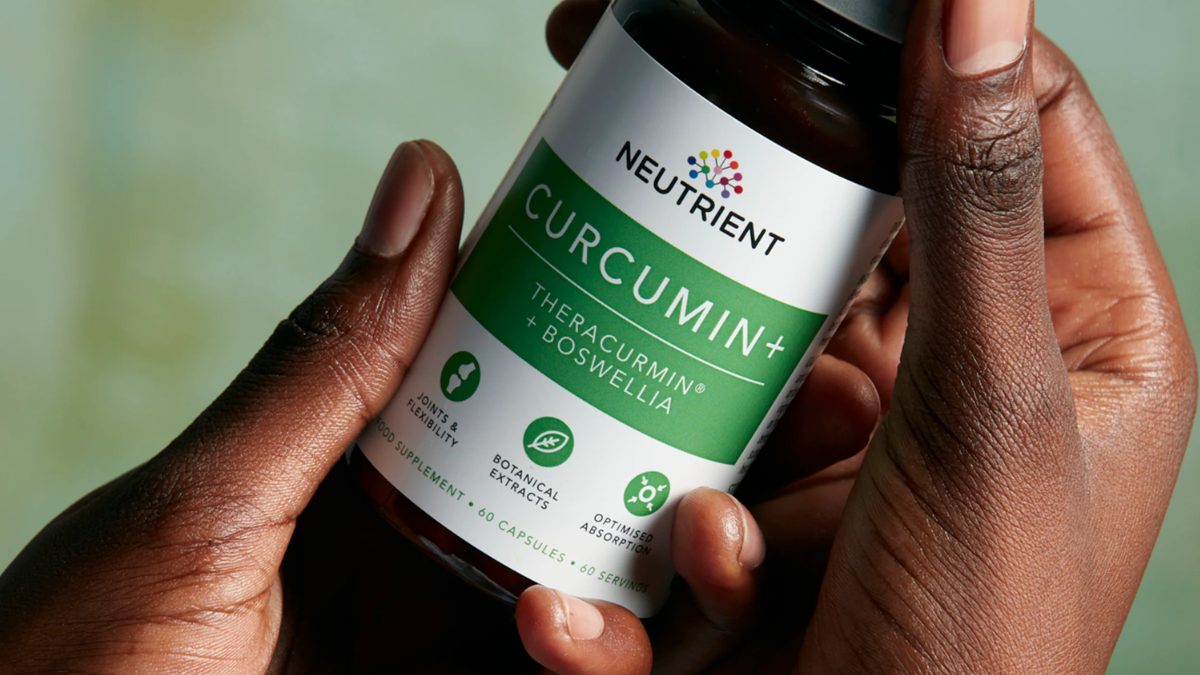
La curcumine est l'un des phytonutriments les plus étudiés en science nutritionnelle, avec des milliers d'études précliniques et un nombre croissant d'essais cliniques sur l'homme explorant ses propriétés anti-inflammatoires et antioxydantes. Dérivée du rhizome de la plante de curcuma, la curcumine est utilisée dans les pratiques traditionnelles ayurvédiques et asiatiques depuis des siècles et continue d'attirer l'intérêt scientifique pour son rôle potentiel dans le soutien de la santé articulaire, du vieillissement sain et du bien-être général.
L'un des principaux défis de la supplémentation en curcumine est que les extraits de curcumine standard sont naturellement difficiles à absorber par l'organisme. Ils sont peu solubles dans l'eau, rapidement métabolisés et rapidement éliminés, ce qui signifie qu'une proportion relativement faible peut être disponible pour l'organisme.
Neutrient Curcumin+ a été formulé en tenant compte de ce défi. Il combine Theracurmin®, une technologie japonaise brevetée de dispersion colloïdale qui s'est avérée offrir une biodisponibilité considérablement supérieure à celle des extraits de curcumine standard, avec Casperome®, un extrait de boswellia à base de phytosomes conçu pour améliorer l'absorption des acides boswelliques. Ensemble, ces ingrédients brevetés offrent une source pratique, une fois par jour, de curcumine et de boswellia sous des formes hautement absorbables.

Qu'est-ce que la curcumine ? Et qu'est-ce que la boswellia ?
Les gens se demandent souvent si la curcumine et le curcuma sont la même chose. Ils sont étroitement liés mais non identiques : le curcuma (Curcuma longa) est la racine entière de la plante, tandis que la curcumine est le principal composé bioactif que l'on y trouve, responsable d'une grande partie de la couleur jaune-orange éclatante de la racine. Le curcuma appartient à la famille du gingembre et est originaire de l'Asie du Sud-Est, l'Inde étant le plus grand producteur mondial. Environ 20 g de curcumine peuvent être obtenus à partir d'un kilogramme de racine de curcuma, bien que cela varie en fonction des conditions de croissance.
Le curcuma a une longue histoire d'utilisation dans les pratiques de santé traditionnelles à travers l'Asie, en particulier dans les traditions ayurvédiques liées à la santé digestive et inflammatoire. Les recettes indiennes traditionnelles combinent souvent le curcuma avec des graisses et du poivre noir — un jumelage maintenant compris comme favorisant l'absorption de la curcumine, compte tenu de la liposolubilité de la curcumine et des propriétés d'amélioration de la biodisponibilité de la pipérine. Au cours des dernières décennies, la curcumine est devenue le sujet d'une vaste recherche en laboratoire et clinique sur ses effets antioxydants, anti-inflammatoires, neuroprotecteurs et métaboliques.
La composition du curcuma
Pourquoi la biodisponibilité est-elle si importante ? La curcumine est naturellement hydrophobe, ce qui signifie qu'elle ne se dissout pas facilement dans l'eau. Comme le tube digestif est en grande partie aqueux, une proportion significative de la curcumine standard peut le traverser sans être absorbée, tandis qu'une grande partie de la fraction absorbée est rapidement métabolisée par le foie et les tissus intestinaux. L'amélioration de la biodisponibilité est donc devenue un objectif majeur de la recherche moderne sur la curcumine — des formulations telles que Theracurmin® utilisent la technologie de dispersion colloïdale pour créer de très petites particules dispersibles dans l'eau qui peuvent améliorer l'absorption par rapport aux extraits standard.
Qu'est-ce que le boswellia ?
Le Boswellia serrata, communément appelé encens indien, est un arbre à feuilles caduques originaire de certaines régions de l'Inde, de l'Afrique du Nord et du Moyen-Orient. La résine de son écorce est utilisée depuis longtemps dans les pratiques ayurvédiques et moyen-orientales traditionnelles, notamment pour le bien-être des articulations et du système digestif. La recherche moderne a identifié un groupe de composés dans la résine appelés acides boswelliques, qui ont suscité l'intérêt pour leur rôle potentiel dans le soutien des processus inflammatoires normaux du corps par des mécanismes différents de ceux de la curcumine.
La résine de Boswellia contient naturellement 11 acides boswelliques différents, dont l'acide bêta-boswellique (B-BA), l'acide acétyl-céto-bêta-boswellique (AKBA) et l'acide acétyl-bêta-boswellique (ABBA). La recherche suggère que ceux-ci pourraient interagir avec la voie 5-lipoxygénase (5-LOX), impliquée dans la production de molécules de signalisation inflammatoire appelées leucotriènes. De nombreux extraits de Boswellia sont standardisés pour la seule teneur en AKBA, alors que Casperome® est formulé pour fournir le profil naturel complet des 11 acides boswelliques, y compris l'acide bêta-boswellique, qui, selon certaines recherches, pourrait contribuer de manière significative à l'activité du Boswellia.

Sources alimentaires de curcumine et de boswellia
Bien que l’alimentation seule ne puisse apporter les quantités concentrées de curcumine et d’acides boswelliques fournies par Neutrient Curcumin+, le tableau ci-dessous donne une idée des sources naturelles. La résine de Boswellia n’étant pas un ingrédient alimentaire, l’apport alimentaire en acides boswelliques n’est pas réalisable dans la pratique. La curcumine alimentaire ne fournit également que des traces par rapport aux formes supplémentaires et est limitée par les mêmes problèmes d’absorption qui affectent les compléments standard.
| Source alimentaire | Teneur en curcumine | Teneur en acides boswelliques |
|---|---|---|
| Racine de curcuma (fraîche) | ~3 % de curcuminoïdes | ~2–4 % (en résine séchée) |
| Curcuma en poudre (séché) | ~2–9 % de curcuminoïdes | ~3–8 % (résine séchée) |
| Poudre de curry | ~0,3–3 % de curcuminoïdes | Traces dans les mélanges d’épices |
| Golden milk / latte au curcuma | Modérée (variable selon la recette) | Source non significative |
| Moutarde (comme colorant) | Très faible (<0,1 %) | Source non significative |
| Encens / gomme-résine | Sans objet | Source naturelle de résine |
Bienfaits de la curcumine : ce qu'en dit la science
La curcumine est l'un des composés végétaux les plus étudiés, avec des recherches explorant ses effets sur un large éventail de systèmes corporels. Bien qu'une grande partie des preuves provienne de la recherche en laboratoire et préclinique, un nombre croissant d'études cliniques humaines ont examiné son rôle potentiel dans la santé et le bien-être. Les sections ci-dessous résument les domaines qui ont suscité le plus grand intérêt scientifique.


Pourquoi associer la curcumine et la boswellia ?
La curcumine et la boswellia ont été étudiées pour leur capacité potentielle à soutenir la réponse inflammatoire naturelle du corps par des voies biologiques différentes mais complémentaires. La recherche suggère que la curcumine peut influencer les voies de signalisation impliquant NF-kB, COX-2 et iNOS, tandis que les acides boswelliques ont été étudiés principalement pour leur interaction avec la voie 5-LOX, qui est impliquée dans la production de molécules de signalisation inflammatoires appelées leucotriènes.
Étant donné que ces voies jouent des rôles différents dans la réponse inflammatoire, la combinaison de la curcumine et de la boswellia dans une seule formulation peut apporter un soutien nutritionnel plus large que l'un ou l'autre ingrédient seul. En bref, la curcumine cible l'inhibition de NF-kB, la suppression de COX-2 et l'inhibition d'iNOS, tandis que la boswellia cible l'inhibition de 5-LOX et la modulation de la voie des leucotriènes – deux voies distinctes pour soutenir les processus inflammatoires normaux du corps.
"La curcumine est l'un des ingrédients botaniques les mieux étudiés disponibles, mais la façon dont elle est formulée peut faire une différence significative dans la quantité absorbée. En pratique, je recommande souvent de la curcumine à biodisponibilité améliorée, parallèlement à d'autres mesures diététiques et de style de vie, pour les clients qui cherchent à soutenir le confort articulaire et le bien-être général. L'inclusion de la boswellia Casperome® ajoute un ingrédient botanique complémentaire avec une base de preuves intéressante et croissante."

Six choses à savoir sur la curcumin


Qu'est-ce qui rend Neutrient Curcumin+ différent ?
Neutrient Curcumin+ a été formulé en tenant compte de deux considérations clés. La première est que la faible biodisponibilité naturelle de la curcumine peut limiter la quantité disponible pour l'organisme. La seconde est que la combinaison de formes hautement absorbables de curcumine et de boswellia peut apporter un soutien nutritionnel complémentaire par différentes voies biologiques. Le tableau ci-dessous montre comment Theracurmin® se compare aux autres formes de curcumine en termes de biodisponibilité relative.
| Source alimentaire | Teneur en curcumine | Teneur en acides boswelliques |
|---|---|---|
| Racine de curcuma (fraîche) | ~3 % de curcuminoïdes | ~2–4 % (en résine séchée) |
| Curcuma en poudre (séché) | ~2–9 % de curcuminoïdes | ~3–8 % (résine séchée) |
| Poudre de curry | ~0,3–3 % de curcuminoïdes | Traces dans les mélanges d’épices |
| Golden milk / latte au curcuma | Modérée (variable selon la recette) | Source non significative |
| Moutarde (comme colorant) | Très faible (<0,1 %) | Source non significative |
| Encens / gomme-résine | Sans objet | Source naturelle de résine |
Le problème de la biodisponibilité de la curcumine standard
Les extraits de curcumine standard sont naturellement difficiles à absorber en raison de la très faible solubilité de la curcumine dans l'eau. Des études suggèrent qu'une grande partie de la curcumine consommée par voie orale peut traverser le tube digestif sans être absorbée, tandis qu'une grande partie de la fraction absorbée est rapidement métabolisée. C'est l'une des raisons pour lesquelles la technologie de formulation est devenue un domaine important de la recherche sur la curcumine, axée sur l'amélioration de la quantité disponible pour l'absorption.
Theracurmin® : biodisponibilité améliorée
Theracurmin® est une formule brevetée japonaise de curcumine conçue pour améliorer sa dispersion et son absorption. La technologie réduit la curcumine en particules submicroniques stabilisées dans une matrice dispersible dans l'eau, améliorant ainsi sa biodisponibilité dans le tube digestif. Des études pharmacocinétiques cliniques ont démontré une absorption nettement plus élevée que la poudre non formulée standard, avec des augmentations publiées allant de 27 à 42 fois selon le comparateur et la méthodologie. Elle a été étudiée dans des études humaines explorant le confort articulaire, la santé cardiovasculaire et la fonction cognitive.
Casperome® : boswellia sous forme de phytosome
Casperome® est un extrait breveté de boswellia qui utilise la technologie Phytosome® pour favoriser l'absorption des acides boswelliques, en combinant l'extrait de boswellia avec des phospholipides naturellement présents dans les membranes cellulaires. Des recherches cliniques ont fait état de niveaux circulants d'acides boswelliques plus élevés après une supplémentation en Casperome® par rapport aux extraits de boswellia standard. Contrairement aux produits axés principalement sur la teneur en AKBA, Casperome® est standardisé pour fournir le spectre complet des acides boswelliques naturels présents dans la résine.
Pourquoi associer curcumine et boswellia ?
La curcumine et la boswellia ont été étudiées pour leur interaction avec des voies différentes mais complémentaires dans la réponse inflammatoire naturelle de l'organisme. La curcumine a été principalement étudiée en relation avec le NF-kB et la COX-2, tandis que les acides boswelliques ont été étudiés pour leur interaction avec la 5-LOX. Étant donné que ces voies jouent des rôles différents, la combinaison des deux dans une seule formulation peut fournir un soutien nutritionnel plus large que l'utilisation de l'un ou l'autre ingrédient seul.
Formulation propre
Neutrient Curcumin+ ne contient ni colorants, ni arômes, ni édulcorants, ni stimulants artificiels et est exempt de lactose et d'excipients inutiles. La gélule HPMC (hydroxypropylméthylcellulose) convient aux végétaliens, le produit a une durée de conservation de deux ans et est fourni dans un emballage recyclable.
| Ingrédient | Quantité par gélule | Rôle |
|---|---|---|
| Curcumine sous forme de Theracurmin® | 60 mg (équiv. à 84 g de racine de curcuma) | Dispersion colloïdale japonaise brevetée de particules de curcumine submicroniques et dispersibles dans l’eau — jusqu’à 42 fois plus biodisponible que la curcumine standard. Étudiée pour ses propriétés antioxydantes et son rôle potentiel dans la santé articulaire, cognitive et métabolique. |
| Boswellia serrata sous forme de Casperome® | 250 mg (équiv. à 500 mg de résine de boswellia) | Boswellia à spectre complet délivré en phytosome, apportant les 11 acides boswelliques dont l’acide bêta-boswellique — des taux plasmatiques 3–7 fois supérieurs à ceux du boswellia standard. Étudié pour le bien-être articulaire, digestif et respiratoire via les voies 5-LOX. |
| Lécithine (soja) | Excipient | Support phospholipidique de la technologie Phytosome® et de la formulation en gélule ; apporte de la phosphatidylcholine, composant des membranes cellulaires. |

À qui s'adresse Neutrient Curcumin+ ?
Neutrient Curcumin+ est conçu pour les adultes à la recherche d’un supplément de curcumine et de boswellia de haute qualité à biodisponibilité améliorée. Il peut être particulièrement adapté pour :
• Les personnes souhaitant soutenir le confort et la mobilité de leurs articulations dans le cadre d’un mode de vie sain
• Les personnes actives et celles ayant un mode de vie exigeant physiquement qui veulent un soutien nutritionnel pour la récupération et le bien-être général
• Les personnes âgées souhaitant maintenir leur mobilité, leur santé cognitive et un vieillissement sain
• Ceux qui recherchent un supplément de curcumine de haute qualité utilisant une technologie d’absorption avancée
• Les personnes désireuses de soutenir leur bien-être métabolique, cardiovasculaire ou digestif dans le cadre d’une alimentation équilibrée et d’un mode de vie sain
• Toute personne souhaitant intégrer des ingrédients botaniques bien étudiés dans sa routine de bien-être quotidienne

Comment prendre Neutrient Curcumin+
Prendre 1 capsule par jour, apportant 60 mg de curcumine sous forme de Theracurmin® et 250 mg de boswellia sous forme de Casperome®. Les formes à biodisponibilité améliorée signifient qu'une seule capsule à dose modeste est conçue pour délivrer plus que des doses beaucoup plus importantes d'extraits standard.
Pendant ou après les repas
La curcumine est liposoluble, donc la prise de la capsule avec un repas contenant un peu de matières grasses peut favoriser davantage l'absorption et une digestion confortable
À tout moment de la journée
Il n'y a pas d'heure de la journée obligatoire. Choisissez un moment qui correspond à votre routine et est facile à retenir, par exemple avec le petit-déjeuner ou votre repas principal
La cohérence est importante
Les ingrédients botaniques sont généralement étudiés dans le cadre d'une utilisation régulière et continue. Prendre Curcumin+ quotidiennement sur une période prolongée est plus conforme à la façon dont il a été étudié qu'une utilisation occasionnelle.
 Rangement

À conserver dans un endroit frais et sec, à l'abri de la lumière directe du soleil. À utiliser dans les 6 mois suivant l'ouverture. Le produit a une durée de conservation de deux ans et un emballage recyclable

Quelle est la sécurité de Curcumin+ ?
La curcumine a fait l'objet de nombreuses études et est généralement considérée comme bien tolérée lorsqu'elle est utilisée à des doses appropriées. Des études humaines ont examiné des doses considérablement plus élevées que celles trouvées dans Neutrient Curcumin+, qui fournit 60 mg de curcumine sous forme de Theracurmin® avec 250 mg de boswellia sous forme de Casperome®, en utilisant des formes à biodisponibilité améliorée développées pour améliorer l'absorption.
Comme pour tout complément alimentaire, les personnes prenant des médicaments ou souffrant d'une condition médicale existante devraient consulter un professionnel de la santé avant utilisation. La curcumine peut interagir avec les médicaments anticoagulants et peut ne pas convenir à certaines personnes sans avis professionnel.
Curcumin+ n'est pas recommandé pour les enfants de moins de 18 ans, ni pendant la grossesse ou l'allaitement. Conserver dans un endroit frais et sec, à l'abri de la lumière directe du soleil et utiliser dans les 6 mois après ouverture.
Avertissement
Mise en garde : déconseillé aux personnes sous anticoagulants, aux enfants de moins de 18 ans, aux femmes enceintes ou allaitantes. Consultez un professionnel de la santé avant utilisation si vous prenez des médicaments ou si vous avez un problème de santé. Les compléments alimentaires ne se substituent pas à une alimentation variée et équilibrée ni à un mode de vie sain. À conserver dans un endroit frais et sec, à l'abri de la lumière directe du soleil. À utiliser dans les 6 mois suivant l'ouverture.
Références
1. Ahmad RS, et al. Biochemistry, safety, pharmacological activities and clinical applications of turmeric: a mechanistic review. Evid Based Complement Alternat Med. 2020:7656919.
2. Akazawa N, et al. Curcumin ingestion and exercise training improve vascular endothelial function in postmenopausal women. Nutr Res. 2012;32(10):795-799.
3. Akbari M, et al. The effects of curcumin on weight loss among patients with metabolic syndrome: a systematic review and meta-analysis. Front Pharmacol. 2019;10:649.
4. Alappat L, Awad AB. Curcumin and obesity: evidence and mechanisms. Nutr Rev. 2010;68(12):729-738.
5. Al-Delaimy WK, et al. Curcumin content of turmeric and curry powders. Nutr Cancer. 2006;55(2):126-131.
7. Alwi I, et al. The effect of curcumin on lipid level in patients with acute coronary syndrome. Acta Med Indones. 2008;40(4):201-210.
8. Anand P, et al. Bioavailability of curcumin: problems and promises. Mol Pharm. 2007;4(6):807-818.
9. Ejaz A, et al. Curcumin inhibits adipogenesis in 3T3-L1 adipocytes and angiogenesis and obesity in C57/BL mice. J Nutr. 2009;139(5):919-925.
11. Amalraj A, et al. A novel highly bioavailable curcumin formulation improves symptoms and diagnostic indicators in rheumatoid arthritis patients. J Med Food. 2017;20(10):1022-1030.
13. Bertuccioli A, et al. Potential role of bioavailable curcumin in weight loss and omental adipose tissue decrease. Eur Rev Med Pharmacol Sci. 2015;19:4195-4202.
14. Brasacchio C, et al. Curcumin and type 2 diabetes mellitus: prevention and treatment. Nutrients. 2019;11(8):1837.
15. Chandan S, et al. Curcumin use in ulcerative colitis: a systematic review and meta-analysis. Ann Gastroenterol. 2020;33(1):53-58.
17. Cox KH, Pipingas A, Scholey AB. Investigation of the effects of solid lipid curcumin on cognition and mood in a healthy older population. J Psychopharmacol. 2015;29:642-651.
18. Daily JW, et al. Efficacy of turmeric extracts and curcumin for alleviating the symptoms of joint arthritis. J Med Food. 2016;19(8):717-729.
20. Jovicic D, et al. Nutritional and health benefits of curcumin. Food Health Dis. 2017;6(1):22-27.
21. Decker KJ. Still gold: turmeric studies are revealing new and surprising benefits. Nutritional Outlook. 2020;23(3).
22. Peschel D, Koerting R, Nass N. Curcumin induces changes in expression of genes involved in cholesterol homeostasis. J Nutr Biochem. 2007;18(2):113-119.
24. Geethanjali A, et al. Analysis of curcumin content of turmeric samples from various states of India. Int J Pharma Chem Res. 2016;2(1):55-62.
29. Hassan F, et al. Curcumin as an alternative epigenetic modulator: mechanism of action and potential effects. Front Genet. 2019;10:514.
30. Hewlings SJ, Kalman DS. Curcumin: a review of its effects on human health. Foods. 2017;6(10):92.
32. Hu Y, et al. Neuroprotective effects of curcumin alleviate lumbar intervertebral disc degeneration. Mol Med Rep. 2017;16:6864-6869.
33. Itoh T, et al. Effective extraction of curcuminoids by grinding turmeric with medium-chain triacylglycerols. Food Sci Technol Res. 2013;19(4):655-659.
34. Klawitter M, et al. Curcuma DMSO extracts and curcumin exhibit anti-inflammatory and anti-catabolic effects on human intervertebral disc cells. J Inflamm. 2012;9(1):29.
37. Li L, Zhang J, Zhang Y. Curcumin in antidepressant treatments: an overview of potential mechanisms. Basic Clin Pharmacol Toxicol. 2020;127:243-253.
38. Lv FH, et al. Effects of curcumin on apoptosis of cardiomyocytes and expression of NF-kB, PPAR-y and Bcl-2 in rats with myocardial infarction injury. Exp Ther Med. 2016;12(6):3877-3884.
41. Pan J, et al. Curcumin inhibition of JNKs prevents dopaminergic neuronal loss in a mouse model of Parkinson's disease. Transl Neurodegener. 2012;1(1):16.
45. Rakotoarisoa M, Angelova A. Amphiphilic nanocarrier systems for curcumin delivery in neurodegenerative disorders. Medicines. 2018;5(4):126.
46. Rahmani S, et al. Treatment of non-alcoholic fatty liver disease with curcumin: a randomized placebo-controlled trial. Phytother Res. 2016;30(9):1540-1548.
47. Ramaholimihaso T, et al. Curcumin in depression: potential mechanisms of action and current evidence. Front Psychiatry. 2020;11:572533.
48. Raman T, et al. Cytoprotective mechanism of action of curcumin against cataract. Pharmacol Rep. 2016;68:561-569.
50. Shabbir U, et al. Curcumin and its derivatives as theranostic agents in Alzheimer's disease. Int J Mol Sci. 2021;22(1):196.
51. Shehzad A, et al. Curcumin in inflammatory diseases. Biofactors. 2013;39(1):69-77.
52. Shen L, et al. Curcumin and ageing. Biofactors. 2013;39(1):133-140.
53. Singh S. Piperine and curcumin as bioavailability enhancers for drugs. J Pharmacol Toxicol. 2020;10(3):1-2.
54. Stankovic I. Curcumin: chemical and technical assessment. 61st JECFA. 2004:1-8.
55. Suskind DL, et al. Tolerability of curcumin in pediatric inflammatory bowel disease. J Pediatr Gastroenterol Nutr. 2013;56(3):277-279.
56. Thorne Research. Monograph: Curcuma longa. Altern Med Rev. 2001;6:S62-66.
59. Vandermolen J, et al. Comparison of Remicade to curcumin for the treatment of Crohn's disease: a systematic review. Complement Ther Med. 2017;33:322-328.
60. Sasaki H, et al. Innovative preparation of curcumin for improved oral bioavailability. Biol Pharm Bull. 2011;34(5):660-665.
61. Comparative pharmacokinetics of Theracurmin, a highly bioavailable curcumin, in healthy adult subjects. PMC9097512; NCT04028739.
62. Gough LA, et al. Casperome/curcumin combination anti-inflammatory mechanisms; Indena Casperome clinical data, Indena SpA.
63. Indena SpA. Casperome: Boswellia Phytosome product monograph and clinical data summary. indena.com.


