



| Neu Biotic – par gélule quotidienne | Détail |
|---|---|
| Souches bactériennes vivantes | 20 souches réparties sur 5 genres |
| UFC totales | 30 milliards d’UFC (à la fabrication) |
| Prébiotiques | Inuline (100 mg) + FOS (50 mg) |
| Adultes | 1 gélule par jour |
| Enfants de 12 ans et plus | 1 gélule par jour |
| Type de gélule | Gastro-résistante (résistante à l’acidité) |
| Conservation | En dessous de +21°C ; à réfrigérer après ouverture |
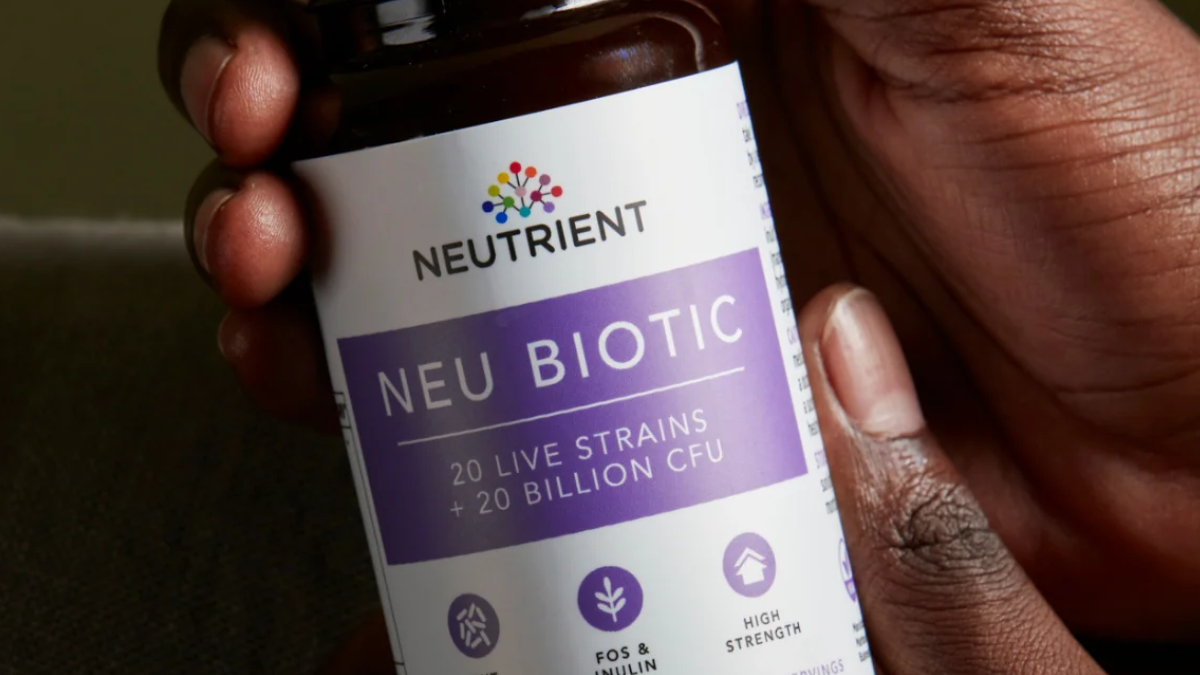
Le corps humain est un écosystème florissant – environ 30 trillions de cellules humaines côtoient quelque 39 trillions de cellules microbiennes : des bactéries, des champignons, des virus et des protozoaires qui forment ensemble le microbiome humain. Ce microbiome est aussi unique qu’une empreinte digitale, et son équilibre a été lié à la digestion, à la fonction immunitaire, à l’humeur, à la santé de la peau et à d’autres aspects du bien-être.
L’intérêt pour les probiotiques en tant que supplément de bactéries vivantes pour la santé intestinale s’est accru parallèlement à la recherche sur des souches spécifiques de cultures vivantes. Les preuves suggèrent que certaines souches peuvent favoriser le confort digestif, la régularité intestinale, la fonction immunitaire et certains aspects du bien-être mental lorsqu’elles sont utilisées à des doses étudiées. Il est maintenant bien établi que les effets des cultures vivantes sont spécifiques à la souche et dépendent de la dose, et qu’ils peuvent être améliorés lorsqu’ils sont combinés à des prébiotiques qui aident à nourrir les bactéries introduites.
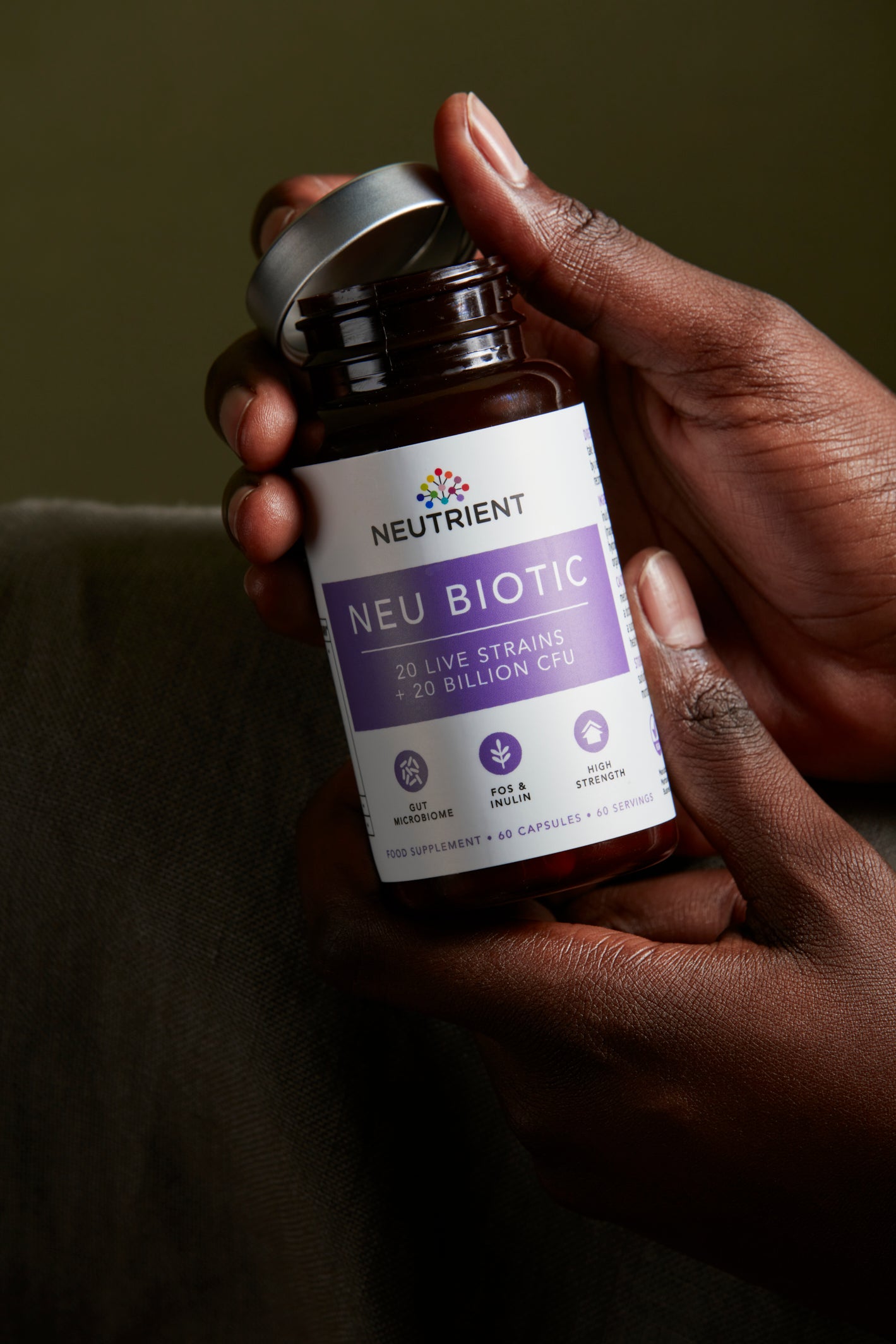
Neutrient Neu Biotic est un supplément bactérien multi-souches à haute concentration, délivrant 30 milliards d’UFC provenant de 20 souches de bactéries vivantes par capsule quotidienne, combinées aux prébiotiques inuline et FOS. Sa capsule entérique est conçue pour aider à protéger les cultures vivantes pendant le transit stomacal et à favoriser leur libération dans l’intestin, où ces bactéries résident naturellement.

Que sont les cultures vivantes et les prébiotiques ?
Les cultures vivantes, désignées dans la littérature scientifique sous le nom de probiotiques, sont des micro-organismes vivants qui peuvent offrir des bienfaits pour la santé lorsqu'ils sont consommés en quantités adéquates. On les trouve naturellement dans les aliments fermentés et dans les suppléments concentrés. Beaucoup font partie du microbiote intestinal, la communauté complexe de bactéries, levures et autres microbes du tube digestif, où résident environ 500 à 1 000 espèces bactériennes. Lorsque les populations bénéfiques sont réduites — par les antibiotiques, une mauvaise alimentation, la maladie ou le stress chronique — des bactéries ou levures opportunistes peuvent s'installer, une perturbation connue sous le nom de dysbiose.
Les prébiotiques sont des fibres non digestibles qui servent de source de nourriture aux bactéries bénéfiques, favorisant leur croissance et leur activité. Lorsqu'elles sont fermentées par les microbes intestinaux, elles produisent des acides gras à chaîne courte tels que le butyrate, le propionate et l'acétate. Parmi les plus connus figurent l'inuline et les FOS, tous deux contenus dans Neu Biotic — la combinaison de cultures vivantes avec les fibres qui les nourrissent crée un synbiotique, une approche fondamentalement plus intelligente qu'un probiotique seul.
De combien avez-vous besoin ? Dosage et UFC
La puissance d’un supplément de cultures vivantes est mesurée en unités formant colonies (UFC). Il n’existe pas de dose minimale unique convenue pour la santé générale, mais la recherche clinique utilise généralement plusieurs milliards d’UFC par jour, et une revue de 2017 a montré que 10 milliards d’UFC par jour étaient associés à des bénéfices pour la diarrhée associée aux antibiotiques. Les 30 milliards d’UFC de Neu Biotic ont été sélectionnés pour s’aligner sur les niveaux de dosage utilisés dans la recherche clinique.
Facteurs de risque de déséquilibre du microbiome
La microflore intestinale est généralement stable, régulée par la compétition pour l'espace et les nutriments, mais plusieurs facteurs courants peuvent la déstabiliser. Les antibiotiques ciblent les agents pathogènes mais affectent également les bactéries bénéfiques, et une seule cure peut altérer le microbiome pendant des mois. Le stress chronique modifie le pH intestinal, réduit la motilité et diminue les sécrétions favorables aux lactobacilles. Une alimentation moderne riche en aliments transformés appauvrit les fibres prébiotiques et les microbes bénéfiques. Les médicaments tels que les inhibiteurs de la pompe à protons et les corticostéroïdes modifient le pH et la composition intestinale. Les infections gastro-intestinales aiguës et les maladies chroniques perturbent l'équilibre, et les voyages exposent l'intestin à des bactéries, à de l'eau et à un régime alimentaire inhabituels.

Sources alimentaires : bactéries vivantes et prébiotiques
L'alimentation est la base d'un microbiome sain. Certains aliments apportent des bactéries vivantes ; d'autres fournissent les fibres qui les nourrissent. La variété est essentielle — différentes fibres prébiotiques nourrissent différentes espèces bactériennes, de sorte qu'une alimentation végétale diversifiée favorise un microbiome plus diversifié. Notez que la cuisson peut réduire la teneur en prébiotiques de certains aliments.
| Aliment à bactéries vivantes | Remarques |
|---|---|
| Yaourt (ferments vivants) | L’un des plus répandus ; choisissez la mention « ferments vivants » ou « cultures actives » |
| Kéfir (lait fermenté) | Souvent une gamme de souches plus large que le yaourt ; le kéfir d’eau est sans produits laitiers |
| Kimchi | Chou coréen fermenté ; peut contenir des espèces de Lactobacillus |
| Choucroute | Chou fermenté ; doit être non pasteurisée pour contenir des bactéries vivantes |
| Miso | Pâte de soja fermentée ; également source d’enzymes et de vitamines B |
| Tempeh | Soja entier fermenté ; également source de protéines complètes |
| Natto | Soja fermenté ; riche en vitamine K2 et en bactéries bénéfiques |
| Kombucha | Thé fermenté ; contient une variété de levures et de bactéries |
| Cornichons fermentés (en saumure) | Doivent être en saumure salée, et non au vinaigre, pour contenir des ferments vivants |
| Vinaigre de cidre cru | Non filtré et non pasteurisé ; contient la « mère » de vinaigre |
| Certains fromages à pâte dure | Le gouda, le cheddar, la mozzarella et le cottage cheese peuvent contenir des ferments vivants |
| Aliment prébiotique | Principal composé prébiotique |
|---|---|
| Topinambour | Inuline (l’une des sources alimentaires les plus riches) |
| Racine de chicorée | Inuline et FOS |
| Ail | FOS et inuline |
| Oignons et poireaux | FOS et inuline |
| Asperge | Inuline |
| Bananes (légèrement vertes) | Amidon résistant et FOS |
| Pommes | Pectine (fibre prébiotique) |
| Avoine | Bêta-glucane |
| Orge | Bêta-glucane et FOS |
| Légumineuses et haricots | GOS et amidon résistant |
| Patate douce | Amidon résistant |
| Champignons | Bêta-glucane |
| Chou et courge | Pectine et inuline |
À quoi servent les cultures vivantes et les prébiotiques ?
Un complément alimentaire bactérien multi-souches de haute qualité est conçu pour fonctionner en harmonie avec le microbiome existant du corps. Bien plus qu'un simple résident du système digestif, le microbiote intestinal est impliqué dans la fonction immunitaire, la régulation métabolique, la communication intestin-cerveau et la protection contre les micro-organismes nuisibles. Étant donné que les effets sont spécifiques à la souche et dépendent de la dose, les sections ci-dessous décrivent les domaines où les cultures vivantes et les prébiotiques ont été les plus étudiés.


Pourquoi un synbiotique ? Cultures vivantes avec prébiotiques
Un synbiotique est un complément alimentaire qui associe des probiotiques aux prébiotiques qui les nourrissent. En incluant à la fois l'inuline (100 mg) et les FOS (50 mg) en plus de 20 souches bactériennes vivantes, Neu Biotic fournit aux souches le carburant dont elles ont besoin pour s'établir dans l'intestin, proliférer et produire des acides gras à chaîne courte bénéfiques pour la santé. Il s'agit d'une approche fondamentalement plus intelligente que celle d'un probiotique seul.
L'inuline et les FOS sont deux des prébiotiques les plus étudiés. La recherche suggère que ces fibres aident à soutenir la croissance et l'activité des bactéries bénéfiques, y compris les Bifidobactéries et les Lactobacilles, et leur fermentation contribue à la production d'acides gras à chaîne courte qui jouent un rôle important dans l'environnement intestinal. L'association des souches avec les fibres qui les nourrissent est la logique qui sous-tend toute la formule.
"Neu Biotic est l'un des suppléments que je recommande le plus régulièrement à ma clientèle — aux clients terminant un traitement antibiotique, à ceux souffrant de ballonnements ou d'une digestion irrégulière, et à toute personne soumise à un stress prolongé. Une formule multi-souches avec prébiotiques peut être un moyen utile de soutenir l'écosystème intestinal, car elle combine une gamme de souches bactériennes avec les fibres qui les aident à se développer. Dans ma pratique, cela s'intègre bien aux stratégies alimentaires et de mode de vie visant à soutenir le microbiome existant du corps."

Six faits rapides sur le microbiome


Qu'est-ce qui rend Neutrient Neu Biotic différent ?
Neu Biotic repose sur le principe qu'un supplément de bactéries vivantes doit être complet, cliniquement pertinent et protégé. Chaque décision de formulation reflète une justification scientifique spécifique. Il contient 13 souches de Lactobacillus et 5 souches de Bifidobacterium — les deux genres les plus étudiés cliniquement — ainsi que Streptococcus thermophilus et Enterococcus faecium, listés en détail ci-dessous.
| Strain | Genus | Commonly researched areas |
|---|---|---|
| L. acidophilus | Lactobacillus | Bowel regularity, IBS, immune function, vaginal health |
| L. bulgaricus | Lactobacillus | Lactose digestion, bowel health, immune support |
| L. casei | Lactobacillus | Antibiotic-associated diarrhoea, IBS, immune function |
| L. crispatus | Lactobacillus | Vaginal flora, protection against BV and yeast infection |
| L. gasseri | Lactobacillus | Vaginal health, metabolic health, IBS |
| L. paracasei | Lactobacillus | Immune function, skin health, allergies |
| L. plantarum | Lactobacillus | IBS, bloating, flatulence, gut barrier integrity |
| L. reuteri | Lactobacillus | H. pylori, infantile colic, gut health, immune modulation |
| L. rhamnosus | Lactobacillus | Diarrhoea prevention, allergy, vaginal health, IBS |
| L. jensenii | Lactobacillus | Vaginal flora composition and protection |
| L. fermentum | Lactobacillus | Oxidative stress, immune function, skin health |
| L. lactis | Lactobacillus | Gut barrier, immune modulation, bowel health |
| L. salivarius | Lactobacillus | Oral health, gut barrier, skin inflammation |
| B. bifidum | Bifidobacterium | Immune function, allergy, gut barrier, infants |
| B. breve | Bifidobacterium | Allergies, bowel regularity, infant gut health |
| B. infantis | Bifidobacterium | IBS, inflammatory bowel conditions, infant microbiome |
| B. lactis | Bifidobacterium | Immune function, constipation, respiratory health |
| B. longum | Bifidobacterium | Anxiety, IBS, constipation, immune support |
| Streptococcus thermophilus | Streptococcus | Lactose digestion, gut barrier, bowel health |
| Enterococcus faecium | Enterococcus | Bowel regularity, antibiotic-associated diarrhoea |
20 souches : l'avantage des souches multiples
Un probiotique multi-souches contient une plus grande variété de souches bactériennes qu'un produit mono-souche. L'intestin humain contient naturellement des centaines d'espèces, et la recherche a établi un lien entre une plus grande diversité microbienne et la résilience intestinale. Certaines études suggèrent que les probiotiques multi-souches pourraient offrir des avantages par rapport aux produits mono-souches, potentiellement en raison des interactions entre les souches ou de la dose totale. Les 20 souches de Neu Biotic, réparties sur cinq genres, reflètent l'intérêt scientifique continu pour la diversité et la dose.
30 milliards d'UFC : haute concentration pour un impact significatif
Chaque capsule quotidienne contient 30 milliards d'UFC, une quantité généralement considérée comme un supplément de culture vivante à forte dose. Des études cliniques ont fréquemment utilisé des doses de milliards d'UFC par jour, bien que la dose la plus appropriée dépende des souches et du bénéfice recherché. La dose de 30 milliards d'UFC a été choisie pour correspondre aux niveaux utilisés dans la recherche clinique, y compris des études sur la santé digestive et la diarrhée associée aux antibiotiques.
Lactobacillus et Bifidobacterium : les 20 souches
Neu Biotic contient 13 souches de Lactobacillus et 5 de Bifidobacterium — les deux genres de bactéries intestinales les plus étudiés cliniquement et les plus largement bénéfiques — ainsi que Streptococcus thermophilus et Enterococcus faecium. Ensemble, ils couvrent la régularité intestinale, le syndrome du côlon irritable, la fonction immunitaire, la santé vaginale, la santé de la peau, les allergies et bien plus encore, comme indiqué dans le tableau des souches ci-dessus.
Technologie de cultures vivantes entérosolubles
L'acide gastrique (pH 1,5 à 2) peut inactiver les bactéries probiotiques avant qu'elles n'atteignent l'intestin ; le système d'administration peut donc être tout aussi important que les souches et la dose. La capsule à enrobage entérique de Neu Biotic est conçue pour résister à la dissolution dans l'estomac et libérer son contenu dans l'intestin grêle moins acide, contribuant ainsi à délivrer une plus grande partie de la dose originale de culture vivante là où les bactéries résident.
Cultures vivantes avec prébiotiques : inuline et FOS
Neu Biotic associe des cultures vivantes à des fibres prébiotiques dans une formule synbiotique. Il contient de l'inuline et des FOS, deux des prébiotiques les plus étudiés, dont la recherche suggère qu'ils peuvent favoriser la croissance et l'activité des bactéries bénéfiques, notamment les bifidobactéries et les lactobacilles. Leur fermentation contribue également à la production d'acides gras à chaîne courte qui jouent un rôle important dans l'environnement intestinal.
| Test parameter | Specification | COA result |
|---|---|---|
| Total plate count | < 10,000 CFU/g | Complies |
| Total mould & yeast | < 100 CFU/g | Complies |
| Escherichia coli | Absent per gram | Complies |
| Salmonella spp. | Absent per 10g | Complies |
| Staphylococcus aureus | Absent per gram | Complies |
| Pseudomonas aeruginosa | Absent per gram | Complies |
| Listeria monocytogenes | Negative per 25g | Complies |
| Heavy metals (total) | NMT 5 ppm | Complies |
| Lead | < 3 ppm | Complies |
| Mercury | < 0.1 ppm | Complies |
| Moisture (probiotic blend) | NMT 5.00% | 3.36% |
| Inulin/fructans content | Min. 90.0% | 90.83% |

À qui s'adresse Neutrient Neu Biotic ?
Neu Biotic est conçu pour les adultes et les enfants de 12 ans et plus qui souhaitent inclure un supplément de cultures vivantes dans leur routine quotidienne, ou en réponse à des facteurs pouvant affecter la flore intestinale. Il peut être particulièrement adapté aux personnes suivantes :
• Les personnes cherchant à soutenir leur microbiome intestinal après un traitement antibiotique, l'une des applications des probiotiques les plus étudiées
• Les personnes recherchant un soutien supplémentaire pour le confort et la régularité digestive
• Les personnes traversant des périodes de stress ou de changement de mode de vie, car l'alimentation, les voyages, le sommeil et le stress influencent tous le microbiome
• Les personnes intéressées par la connexion intestin-cerveau et ses liens évolutifs avec le bien-être mental et émotionnel
• Les personnes intéressées par l'axe intestin-peau et la relation entre la santé intestinale et cutanée
• Les voyageurs, pour qui les changements d'alimentation, de routine et d'environnement peuvent modifier le microbiome
• Les personnes âgées, chez qui la composition et la diversité du microbiome peuvent changer avec l'âge
• Les personnes recherchant un supplément propre et végétalien, sans colorants, arômes, édulcorants ou stimulants ajoutés

Comment prendre Neutrient Neu Biotic
La dose recommandée est de 1 capsule par jour, pour les adultes et les enfants de 12 ans et plus, apportant 30 milliards d'UFC et 150 mg de fibres prébiotiques. La capsule à enrobage entérique est conçue pour être prise entière. Conserver en dessous de +21°C et réfrigérer après ouverture pour aider à préserver les cultures vivantes.
 À tout moment de la journée

Neu Biotic peut être pris à tout moment qui convient à votre routine. L'enrobage entérique protège les cultures à travers l'estomac, quel que soit le moment
 Conserver au frais

Maintenir à moins de +21°C et réfrigérer après ouverture. La conservation au frais aide à préserver la viabilité des cultures vivantes pendant toute la durée de vie de la bouteille
 Voyages, stress ou antibiotiques

De nombreuses personnes choisissent de prendre un supplément de ferments lactiques après une cure d'antibiotiques, pendant les périodes de stress, ou en voyage, lorsque le microbiome est le plus susceptible d'être perturbé
 En plus d'une alimentation variée

Un supplément est plus efficace dans le cadre d'une alimentation diversifiée et riche en fibres, qui nourrit un large éventail de bactéries bénéfiques. Il complète, plutôt que de remplacer, les aliments fermentés et prébiotiques

Les cultures vivantes sont-elles sûres ?
Les probiotiques ont un excellent profil de sécurité, des centaines d'essais contrôlés randomisés ayant démontré leur innocuité dans un large éventail de conditions et de populations. Chez les individus par ailleurs en bonne santé, les effets indésirables graves directement attribuables à la supplémentation en probiotiques ont été rares.
L'OMS et la FAO ont noté que les probiotiques peuvent théoriquement être associés à des effets secondaires chez les populations vulnérables, mais en pratique, les infections liées à l'utilisation de probiotiques sont rares et les cas rapportés ont généralement impliqué des patients atteints de maladies sous-jacentes graves.
Les probiotiques doivent être utilisés avec prudence chez les personnes immunodéprimées, celles atteintes de maladies sous-jacentes graves ou celles ayant des cathéters veineux centraux. Pour les adultes et les enfants de 12 ans et plus en bonne santé, Neu Biotic est considéré comme sûr pour une utilisation quotidienne et à long terme.
Chaque lot est fabriqué selon les normes BPF de l'UE et testé indépendamment pour la sécurité microbiologique, les métaux lourds, l'humidité et la puissance avant sa commercialisation, la capsule entérosoluble étant vérifiée pour sa résistance à l'acide.
Avertissement
Déconseillé aux enfants de moins de 12 ans sans avis médical. Si vous êtes enceinte, si vous allaitez, si vous êtes immunodéprimé, si vous avez un problème de santé grave sous-jacent ou si vous prenez des médicaments, consultez un professionnel de la santé avant utilisation. Les compléments alimentaires ne se substituent pas à une alimentation variée et équilibrée et à un mode de vie sain.
Références
1. Abrahamsson TR, et al. Low diversity of the gut microbiota in infants with atopic eczema. J Allergy Clin Immunol. 2012;129(2):434-440.
2. Ahmad K, et al. Probiotics for the treatment of pediatric Helicobacter pylori infection. Iran J Pediatr. 2013;23(1):79-84.
3. Ahrne S, et al. Alteration of intestinal microflora is associated with reduction in abdominal bloating and pain in IBS. Am J Gastroenterol. 2000;95(5):1231-1238.
4. Asha MZ, Khalil SFH. Efficacy and safety of probiotics, prebiotics and synbiotics in IBS. Sultan Qaboos Univ Med J. 2020;20(1):e13-e24.
6. Ballet N, et al. Therapeutic activity of a Saccharomyces cerevisiae-based probiotic on vaginal candidiasis. Virulence. 2017;8(1):74-90.
7. Basoulis D, et al. Health benefits of probiotics: a review. ISRN Nutrition. 2013;481651:1-7.
8. Binns N. Probiotics, prebiotics and the gut microbiota. ILSI Europe Concise Monograph. 2013.
9. Bou-Antoun S, et al. Safety and efficacy of an intravaginal prebiotic gel in the prevention of recurrent bacterial vaginosis. Obstet Gynecol Int. 2012;147867.
10. Boyle R, Robins-Browne RM, Tang MLK. Probiotic use in clinical practice: what are the risks? Am J Clin Nutr. 2006;83(6):1256-1264.
12. Cardona D, et al. Are probiotic treatments useful on fibromyalgia or chronic fatigue syndrome patients? Beneficial Microbes. 2018;9(4):603-611.
13. Chapman CM, Gibson GR, Rowland I. Health benefits of probiotics: are mixtures more effective than single strains? Eur J Nutr. 2011;50(1):1-17.
14. Cremonini F, et al. Meta-analysis: the effect of probiotic administration on antibiotic-associated diarrhoea. Aliment Pharmacol Ther. 2002;16(8):1461-1467.
17. Dinleyici EC, Ozen M. The history of probiotics: the untold story. Benef Microbes. 2015;6(2):159-165.
18. Cavaleri F, Bashar E. Potential synergies of B-hydroxybutyrate and butyrate. J Nutr Metab. 2018;7195760.
19. Gao X, et al. Dose-response efficacy of a proprietary probiotic formula for antibiotic-associated diarrhoea. Am J Gastroenterol. 2010;11.
21. Gilmore MS, Manson JM. The commensal microbiology of the gastrointestinal tract. Adv Exp Med Biol. 2008;635.
23. Herman A. Probiotics supplementation in prophylaxis and treatment of depressive and anxiety disorders. Psychiatr Pol. 2019;53(2):459-473.
24. Homan M, Orel R. Are probiotics useful in Helicobacter pylori eradication? World J Gastroenterol. 2015;21(37):10644-10653.
25. ISAPP. International Scientific Association for Probiotics and Prebiotics. isappscience.org.
26. Johnstone M, et al. Anxiolytic effects of a galacto-oligosaccharides prebiotic in healthy females. Sci Rep. 2021;11:8302.
27. Carlson JL, et al. Health effects and sources of prebiotic dietary fiber. Curr Dev Nutr. 2018;2(3):nzy005.
30. Liu RT, Walsh RFL, Sheehan WAE. Prebiotics and probiotics for depression and anxiety: a systematic review and meta-analysis. Neurosci Biobehav Rev. 2019;102:13-23.
31. Liu RT, et al. Prebiotics and probiotics for depression and anxiety. Neurosci Biobehav Rev. 2019;102:13-23.
32. Ganji-Arjenaki M, Rafieian-Kopaei M. Probiotics are a good choice in remission of inflammatory bowel diseases. J Cell Physiol. 2018;233(3):2091-2103.
33. Majamaa H, Isolauri E. Probiotics: a novel approach in the management of food allergy. J Allergy Clin Immunol. 1997;99(2):179-185.
35. Sanders ME, et al. Probiotic use in at-risk populations. J Am Pharm Assoc. 2016;56:680-686.
36. Morris G, et al. Myalgic encephalomyelitis/chronic fatigue syndrome. Pharmacol Res. 2019:104450.
37. Oddou M, et al. Effect of coordinated probiotic/prebiotic/phytobiotic supplementation on microbiome balance and mood. Funct Foods Health Dis. 2019;9(4):265-275.
38. Orel R, Kamhi Trop T. Intestinal microbiota, probiotics and prebiotics in inflammatory bowel disease. World J Gastroenterol. 2014;20(33):11505-11524.
39. Ouwehand AC. A review of dose-responses of probiotics in human studies. Benef Microbes. 2017;8(2):143-151.
42. Ping L, Gu Q. Biosynthesis of vitamins by probiotic bacteria. InTechOpen. 2016.
43. Rao AV, et al. A randomized, double-blind, placebo-controlled pilot study of a probiotic in emotional symptoms of chronic fatigue syndrome. Gut Pathog. 2009;1:6.
44. Roberfroid M, et al. Prebiotic effects: metabolic and health benefits. Br J Nutr. 2010;104(Suppl 2):S1-63.
46. Sender R, Fuchs S, Milo R. Revised estimates for the number of human and bacteria cells in the body. PLoS Biol. 2016;14(8):e1002533.
47. Sivaprakasam S, Prasad PD, Singh N. Benefits of short-chain fatty acids and their receptors in inflammation and carcinogenesis. Pharmacol Ther. 2016;164:144-151.
49. Wen K, et al. High dose and low dose Lactobacillus acidophilus exerted differential immune modulating effects. Vaccine. 2012;30(6):1198-1207.
50. Whorwell PJ, et al. Efficacy of an encapsulated probiotic Bifidobacterium infantis 35624 in women with IBS. Am J Gastroenterol. 2006;101(7):1581-1590.
51. Yano J, et al. Current patient perspectives of vulvovaginal candidiasis. BMC Women's Health. 2019;19:48.
53. Sharma D, Kober MM, Bowe WP. Anti-aging effects of probiotics. J Drugs Dermatol. 2016;15(1):9-12.
54. Brandi J, et al. Exploring the wound healing, anti-inflammatory and proteomic effects of lactic acid bacteria on keratinocytes. Sci Rep. 2020;10:11572.


